Subcontractor Costs: The Silent Margin Killer
If you're running a contracting business, you already know this: subcontractor costs can bury your margins. I've seen it firsthand across multiple implementations. One missed measurement, one unverified payment, and you're staring at a hefty ₹25 lakh overrun by the end of the project. Multiply this by five or ten projects, and you're bleeding more than ₹1 crore annually.
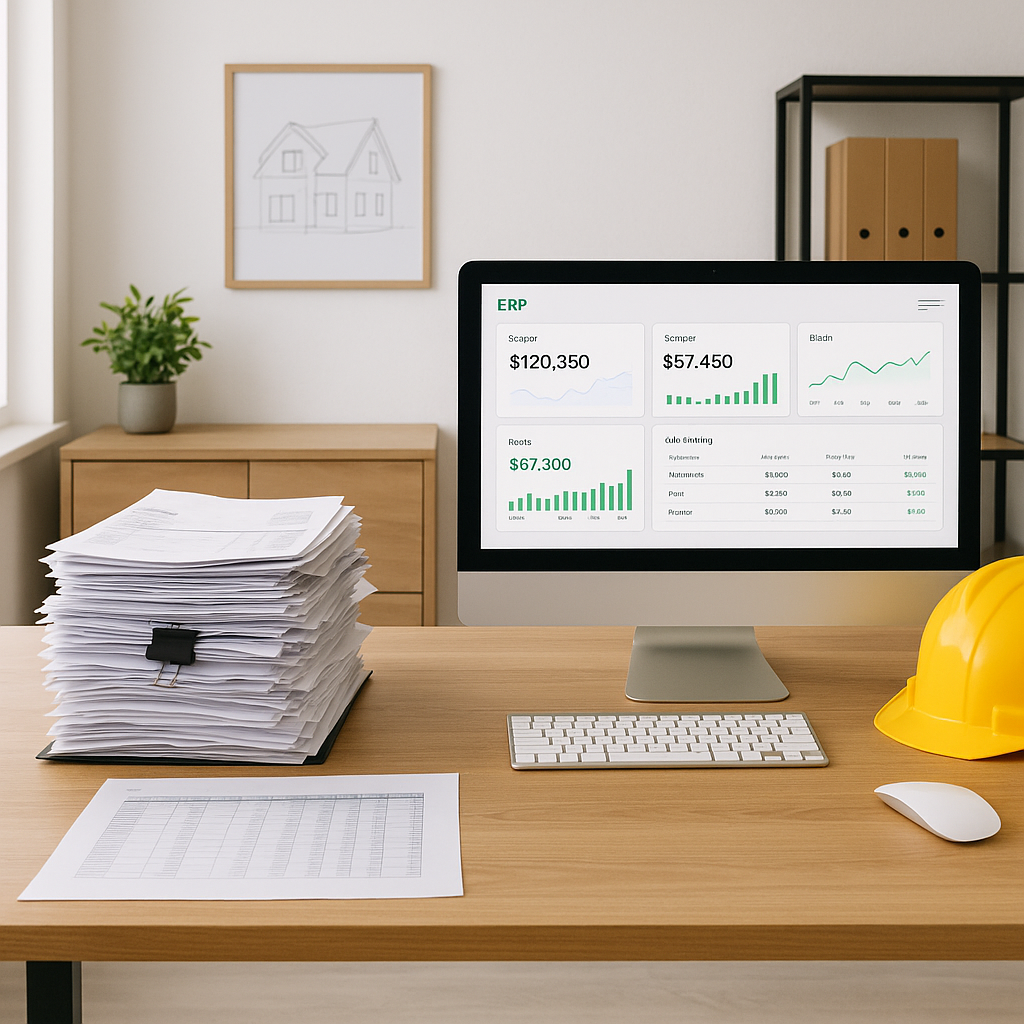
What makes it worse? Manual processes. Most contractors I meet still manage subcontractors on spreadsheets or disconnected systems. Work requisitions (WRs), measurements, and work orders (WOs) don’t sync. Payments are often released based on estimates, not actual progress. Sound familiar?
But here’s the good news: a multi-tenant ERP like JobNext can fix this. Let’s break it down.
Why Multi-Tenant Architecture Matters
First, let’s address the elephant in the room: why does multi-tenancy even matter for subcontractor management? Simple. Multi-tenancy provides:
- Data Isolation: Your organization’s data is completely separate from others, even though you share the same platform. This is critical if you’re managing sensitive subcontractor agreements.
- Shared Updates: JobNext’s multi-tenant architecture means you get platform-wide updates without any disruption to your workflows.
- Scalability: Running 10 projects this year and 30 next year? The system scales seamlessly.
But the real magic lies in how the platform enforces discipline in workflows.
Concrete Example: How Scalability Impacts Subcontractor Management
Imagine you’re working on small residential projects worth ₹1 crore each. If you grow from 10 projects to 30 in a year, your subcontractor network triples. Without scalable systems, tracking costs, payments, and progress for these subcontractors becomes a nightmare. Multi-tenancy ensures that your data grows without hitting performance bottlenecks, keeping your operations smooth.
Actionable Steps:
- Assess your current systems for scalability. Are they ready to handle double or triple the volume?
- Evaluate whether your ERP supports multi-tenancy and seamless updates.
- Prioritize data isolation if your projects deal with sensitive subcontractor or financial information.
The Measurement-Based Workflow: No More Guesswork
Here’s where JobNext shines. It enforces a structured WR → RFP → WO → Measurement workflow. Let me walk you through it:
-
Work Requisition (WR): Site engineers raise a request for subcontractor work. This includes scope, quantity, and any agreed rates.
- Example: A site engineer requests plumbing work for 20 bathrooms across a residential complex. Rates are pre-approved.
-
Request for Proposal (RFP): Procurement teams float tenders to pre-approved subcontractors. Rate schedules are locked upfront, ensuring no surprises later.
- Example: Three subcontractors bid to provide plumbing services. The system automatically highlights the most cost-effective bidder.
-
Work Order (WO): Once the RFP is awarded, the system generates a work order directly linked to the project BOQ.
- Example: The winning subcontractor receives a digital WO specifying the exact deliverables, rates, and schedule.
-
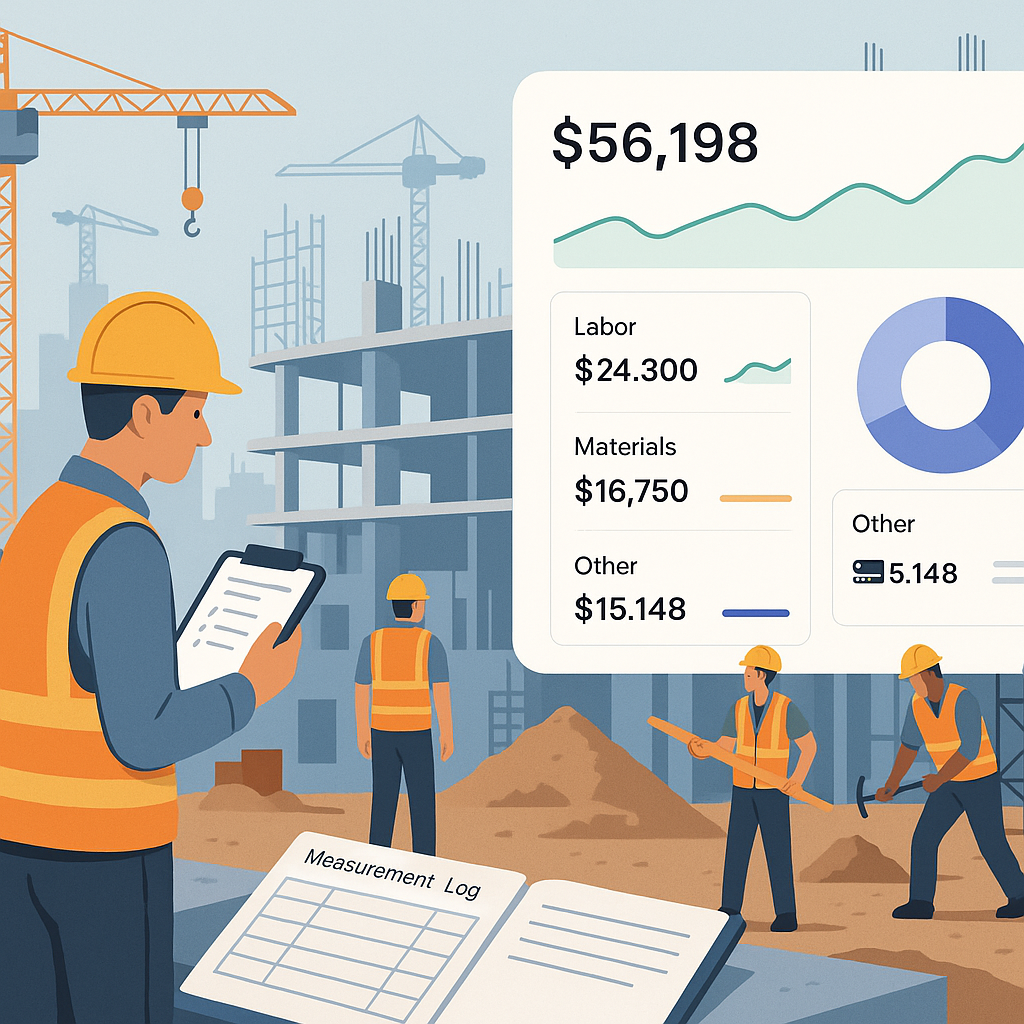
Measurement Entry: After work is completed, site engineers log measurements, which are tied to the original BOQ and work order. This step ensures payments are only processed for verified work.
- Example: The engineer logs measurements for completed plumbing installations, ensuring payments match actual work.
-
Payment Approval: Payments are linked to the approved measurement entries and routed through multi-level approval workflows—no more rogue payments.
Case Study: ₹75 Lakh Saved in Payments
One of our clients, an MEP contractor in Chennai, was losing over ₹1 crore annually due to subcontractor disputes and overpayments. After implementing JobNext, they:
- Reduced disputes by 90% by locking BOQ rates upfront.
- Cut overpayments by ₹75 lakh in the first year through measurement-based approvals.
- Improved subcontractor relationships by paying faster (but only for verified work).
Actionable Steps:
- Standardize your WR → RFP → WO → Measurement workflow to eliminate manual gaps.
- Train site engineers on accurate measurement logging.
- Use multi-level payment approval workflows to prevent unauthorized or excess payments.
Addressing Common Objections
“But my subcontractors don’t use software.”
That’s fine. JobNext doesn’t require them to. All they need to do is submit measurements or invoices, which your team enters into the system. The key is that everything gets tracked centrally.
Actionable Tip: Start by digitizing internal workflows. Subcontractors can be onboarded gradually by providing simple tools for submitting measurements and invoices.
“My projects are too small for this.”
Small projects are where overruns hurt the most. If you’re running multiple ₹1 crore projects, even a 5% overrun adds up fast. JobNext’s scalability means you can start small and grow.
Actionable Tip: Implement measurement-based workflows for small projects to minimize overruns. Use a lightweight ERP module to avoid overspending.
“We already have an ERP.”
Does it enforce WR → RFP → WO → Measurement workflows? If not, you’re leaving money on the table. Generic ERPs often miss construction-specific workflows, which is why JobNext exists.
Actionable Tip: Audit your ERP for construction-specific workflows. If your ERP lacks subcontractor cost controls, consider integrating JobNext.
Comparison Table: Generic ERP vs. JobNext for Subcontractor Management
| Feature | Generic ERP | JobNext |
|---|---|---|
| Construction-Specific Workflows | Limited | Comprehensive (WR → RFP → WO → Measurement) |
| Multi-Tenant Architecture | Rare | Built-in |
| Real-Time Cost Tracking | Often Missing | Fully Integrated |
| Subcontractor Payment Controls | Basic | Multi-Level Approval |
| Scalability for Multiple Projects | Limited | Seamless |
Why Subcontractor Management is Just the Start
Fixing subcontractor cost overruns is just one piece of the puzzle. A multi-tenant ERP like JobNext also:
- Tracks real-time project profitability.
- Unifies HR, finance, procurement, and execution workflows.
- Ensures compliance with GST, TDS, and statutory deductions.
Example: Streamlining Compliance
One contractor in Pune faced hefty penalties due to missed GST filings on subcontractor payments. After switching to JobNext, automated compliance checks ensured timely filing, saving them ₹5 lakh annually in penalties.
FAQ
1. How long does it take to implement JobNext for subcontractor management?
Implementation typically takes 4-6 weeks, depending on the size of your organization and the complexity of your projects. JobNext’s team provides end-to-end support, including training for site engineers and procurement teams.
2. Can JobNext handle international subcontractor agreements?
Yes, JobNext is designed to work with subcontractors across multiple geographies. It supports currency conversions, tax compliance, and multi-language interfaces.
3. What’s the ROI for using JobNext?
Most contractors see a reduction in cost overruns between 10-15% in the first year alone. For a ₹10 crore project, this translates to ₹1-1.5 crore saved annually.
4. How does JobNext handle disputes with subcontractors?
Disputes are minimized because payments are tied to verified measurements and pre-approved rates. If disputes arise, JobNext provides detailed audit trails to resolve them quickly.
5. Can I integrate JobNext with my existing ERP?
Yes, JobNext offers API integrations to connect with popular ERP systems like SAP and Oracle. This allows you to leverage JobNext’s construction-specific workflows while retaining your broader ERP system.
Ready to Stop Bleeding Margins?
If subcontractor costs are eating into your profits, it’s time to act. JobNext can help you enforce discipline, track costs, and protect your margins. Learn more →
Learn more at JobNext.ai