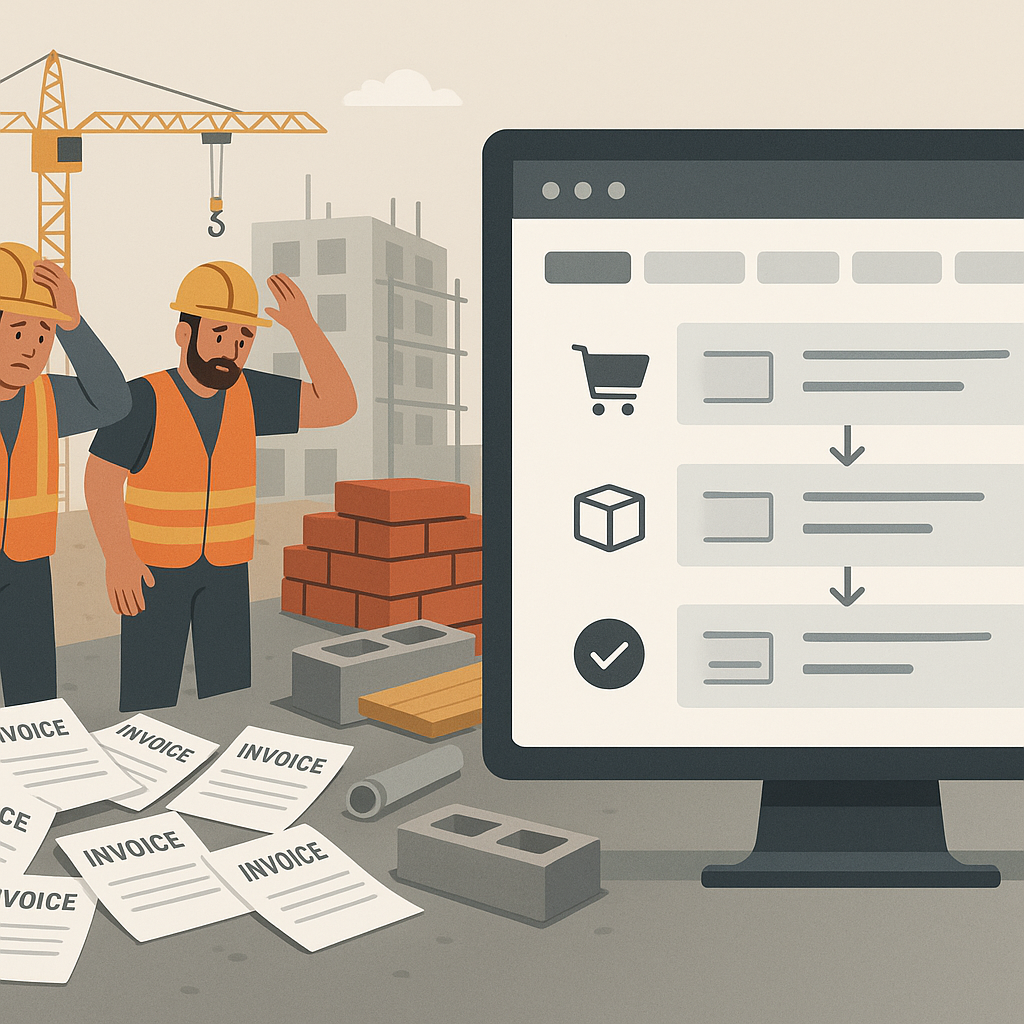
Procurement Chaos: The Silent Profit Killer in Construction
Let’s talk about something that doesn’t get enough attention: procurement. It’s not glamorous, but it’s where margins go to die. Contractors lose lakhs every year because their procurement workflows are inefficient and chaotic. Delayed material requisitions, misaligned RFQs, and rushed purchase orders create a cascade of problems: budget overruns, site delays, and, worst of all, lost client trust.
The Common Pitfall: Skipping Structured Workflows
In my experience, the biggest mistake contractors make during ERP implementation is ignoring structured procurement workflows. Many think, "We'll handle it manually until the system stabilizes." That’s a recipe for disaster. Manual processes are slow, error-prone, and impossible to scale when you’re managing multiple jobs.
Real-World Example: The ₹25 Lakh Loss
Take this real-world example: A mid-size MEP contractor in Chennai lost ₹25 lakh last year because their material requisitions were frequently delayed. Why? They relied on email chains and spreadsheet trackers instead of a centralized ERP workflow. Here’s what typically happened:
- Delayed requisitions: Site teams sent material requests late, often after realizing they were about to run out of critical supplies.
- Uncoordinated RFQs: Procurement teams scrambled to float RFQs, leaving suppliers with unrealistic deadlines.
- Last-minute purchases: To meet project timelines, the contractor had to buy higher-priced materials from local vendors.
This wasn’t a one-off—it happened repeatedly across projects, draining profits and eroding client trust. The lesson? Relying on manual processes for procurement is a ticking time bomb.
JobNext’s Procurement Workflow: A Practical Fix
Here’s where JobNext comes in. Its procurement module enforces a structured path:
- Material Requisition (MR) → Request for Quotation (RFQ) → Vendor Comparative Statement → Purchase Order (PO).
No shortcuts, no guesswork. Every step requires approvals, and every transaction is logged for audit purposes. This isn’t about adding bureaucracy—it’s about creating a predictable process that ensures competitive pricing, on-time delivery, and complete traceability.
Supporting Documents: A Game-Changer
One of JobNext’s standout features is the ability to attach supporting documents—vendor quotations, technical specs, and even material test certificates—directly to the PO. This creates a complete procurement file that’s invaluable during audits or disputes.
Case Study: ₹25 Lakh Saved
Let’s revisit the MEP contractor from Chennai. After adopting JobNext’s procurement workflow, they:
- Reduced last-minute purchases by 80%, thanks to structured requisitions.
- Saw a 10% drop in average material costs through competitive vendor selection.
- Saved ₹25 lakh across projects.
Additionally, fewer site delays meant happier clients and improved chances of repeat business.
The Role of ERP Implementation Best Practices
So how do you implement this without pulling your hair out? Follow these actionable steps:
1. Register Vendors Early
Get vendors into the system before you start procurement. Verify GSTIN, PAN, and bank details upfront to avoid compliance headaches later. For example, a contractor in Bengaluru saved weeks of follow-up time by pre-verifying vendor details during ERP onboarding.
2. Define Approval Chains Before Go-Live
Set up multi-level approval workflows during the configuration phase. Changing these mid-project is a nightmare. A structured approval chain ensures accountability and prevents rogue purchases.
3. Train Your Procurement Team
Don’t just show them buttons. Walk them through the entire MR→RFQ→PO process so they understand how it fits into the bigger picture. For instance, conducting role-specific workshops helped a large civil contractor in Pune achieve 90% ERP adoption within three months.
4. Monitor Budget Impact
Use tools like the Material Budget Burn report to ensure every PO fits within the job’s allocated budget. This prevents last-minute surprises when the finance team raises flags.
5. Enable Vendor Portal Access
For regular vendors, give them access to the portal. This streamlines RFQs and ensures faster responses. A JobNext user reported cutting RFQ response times by 40% after enabling portal access for their top suppliers.
Why Contractors Fail at ERP Procurement
You might be thinking, "This all sounds great, but what if my team refuses to change?" That’s a valid concern. In fact, a JobNext blog post highlights that most ERP rollouts fail because of poor training, not software flaws.
Focus on Workflows, Not Just Features
The key is to focus on workflows—not just software features. When teams understand how structured workflows save time and prevent chaos, they’re far more likely to adopt the system. For example, a contractor in Hyderabad achieved 100% team buy-in after demonstrating how automated workflows prevented delays and reduced costs.
Comparison: Manual vs. ERP Procurement Workflows
| Aspect | Manual Workflow | ERP Workflow |
|---|---|---|
| Speed | Slow (email chains, spreadsheets) | Fast (automated approvals, vendor portals) |
| Error Rate | High (missing data, duplicate entries) | Low (validated fields, audit trails) |
| Scalability | Not scalable for multiple projects | Scalable across jobs and vendors |
| Cost Control | Poor (last-minute purchases) | Excellent (budget tracking, competitive RFQs) |
| Traceability | Limited (scattered documents) | Complete (centralized procurement files) |
FAQs
Q: Can’t we just fix procurement later during ERP implementation?
A: No. Procurement workflows should be configured before go-live. Trying to fix them mid-project creates confusion and resistance.
Q: How do I track vendor performance?
A: Use JobNext’s Vendor Ageing and Comparative Statement reports to evaluate pricing, delivery timelines, and invoice payments.
Q: What if vendors don’t respond quickly to RFQs?
A: Enable portal access for regular vendors. It speeds up quotation submissions and reduces follow-up emails.
Q: How can I prevent rogue purchases?
A: Define approval chains and require multi-level approvals for all POs. JobNext also logs every transaction for audit purposes.
Q: What’s the ROI of structured procurement workflows?
A: Contractors typically save 8–10% on material costs and reduce site delays by 20–30%. For example, a contractor in Mumbai saved ₹18 lakh in just six months.
The Bottom Line
Procurement chaos doesn’t just hurt margins—it derails entire projects. Structured workflows are the cornerstone of successful ERP implementation. JobNext enforces these workflows, saving contractors lakhs and restoring sanity to procurement teams.
If you’re tired of losing money to procurement mistakes, JobNext can help. Get started free →
Learn more at JobNext.ai - Construction ERP