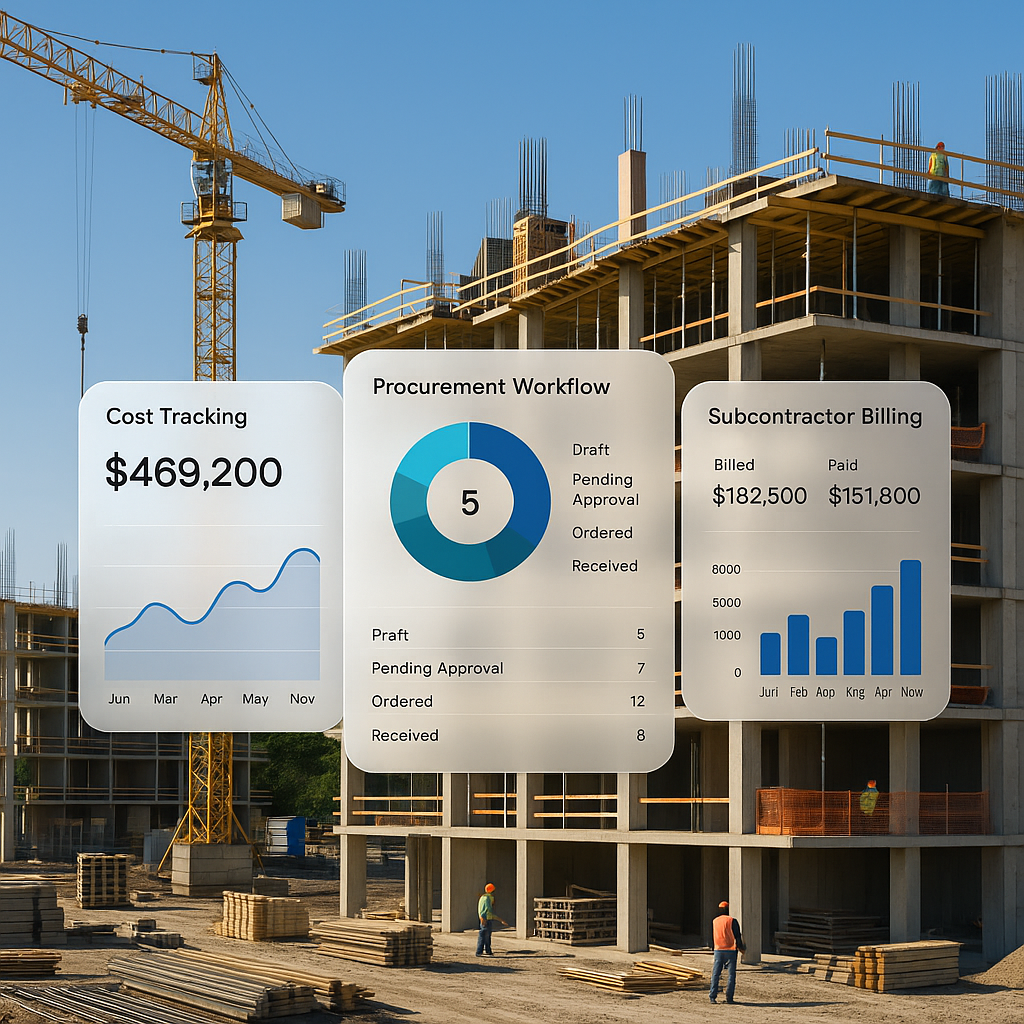
6 Overlooked Causes of Cost Overruns in Construction (And Fixes That Work)
Cost overruns aren’t always about bad math or unrealistic estimates. They’re often caused by avoidable mistakes during project execution. In my experience, addressing these overlooked issues can mean the difference between a profitable project and bleeding margins.
Let’s break down six hidden culprits causing budget blowouts — and, more importantly, how to fix them.
1. Reactive Procurement Instead of Strategic Planning
Most contractors buy materials when they’re already running out. This reactive approach leads to emergency purchases at inflated prices. Worse, it often results in duplicate orders or buying items already available at another site.
Why It Happens:
- Lack of centralized material tracking across projects.
- No clear procurement schedules tied to project timelines.
- Over-reliance on manual processes, leading to poor forecasting.
Real-World Example:
A mid-sized contractor in Pune faced an 18% budget overrun on a commercial project because they repeatedly purchased steel at fluctuating market prices during a shortage. They later discovered 15% of the required steel was already available at a nearby site but wasn’t tracked.
Fix:
Use a structured procurement workflow with budget validation. For example, platforms like JobNext can consolidate material requests (MRs) across projects and enforce rate schedules to avoid price inconsistencies. Their system flags overspending before the PO is issued. ₹25 Lakh Lost to Procurement Chaos? Why Contractors Need Data Integration gives a detailed breakdown of how this works.
Actionable Steps:
- Create a centralized inventory system to track material availability across sites.
- Implement a procurement calendar tied to project schedules.
- Use software like JobNext to enforce rate contracts and ensure consistency in pricing.
2. Uncontrolled Subcontractor Costs
Subcontractor payments can spiral out of control when there’s no link between progress measurements and billing. I’ve seen subcontractors overclaim simply because there was no reliable measurement trail.
Why It Happens:
- No standard process to verify work completed against agreed milestones.
- Poor documentation of change orders or variations.
- Subcontractor invoices processed without adequate checks.
Real-World Example:
A roads project in Bengaluru saw a 12% cost overrun when subcontractors were paid for work that was either incomplete or not aligned with the scope. The absence of measurement-based billing meant overpayments and disputes.
Fix:
Tie payments directly to progress. Platforms like JobNext use measurement-based billing to ensure subcontractors are only paid for verified work. This method also supports retention and recovery controls, reducing overpayments.
Actionable Steps:
- Define clear milestones and link payment schedules to their completion.
- Use technology to implement measurement-based billing.
- Regularly audit subcontractor work to ensure compliance with scope and quality standards.
3. Lack of Real-Time Profitability Tracking
How often do you hear, "We realized the project was over budget only after it was too late"? Most contractors rely on static monthly reports. By the time they see the problem, it’s already snowballed.
Why It Happens:
- Over-reliance on manual reporting, which is prone to delays and errors.
- Lack of integration between project management and accounting software.
- No visibility into day-to-day cost variances.
Real-World Example:
A contractor working on a high-rise project in Mumbai realized they were 10% over budget just three months before completion. By then, it was too late to renegotiate supplier contracts or optimize labor costs.
Fix:
Track profitability in real-time. JobNext’s dashboards compare budgeted vs. actual costs for labor, materials, equipment, and overheads. This allows teams to identify variances early and adjust spending before it’s out of control. Their Projects Dashboard article explains how this can safeguard margins.
Actionable Steps:
- Use software that integrates budget tracking with project execution.
- Monitor cost variances weekly rather than waiting for monthly reports.
- Train project managers to act on early warning signs of overruns.
4. Ignoring Rate Contracts for Recurring Materials
When you’re buying the same materials for multiple projects, inconsistent pricing adds up fast. Without rate contracts, contractors often get stuck paying different prices for the same product.
Why It Happens:
- No standardized supplier agreements.
- Materials purchased on an ad-hoc basis rather than in bulk.
- Lack of procurement monitoring tools.
Real-World Example:
A contractor managing three residential projects in Hyderabad discovered they were paying up to 15% more for cement on one site compared to another. The absence of rate contracts led to unnecessary cost inflation.
Fix:
Lock pricing with rate contracts. JobNext’s procurement module enforces standardized rates across projects, ensuring you don’t overpay for recurring materials. It also routes requests to the nearest available stock, reducing unnecessary purchases.
Actionable Steps:
- Negotiate rate contracts with key suppliers at the start of each fiscal year.
- Use procurement software to enforce these rates across all projects.
- Conduct regular price audits to identify and eliminate inconsistencies.
5. Manual Work Order Changes
A manual work order (WO) process is a recipe for budget overruns. Changes aren’t tracked properly, and approvals are often rushed or skipped.
Why It Happens:
- No digital trail of changes made to WOs.
- Poor communication between site teams and back-office staff.
- Delayed approvals leading to unplanned expenses.
Real-World Example:
A contractor working on an industrial plant in Gujarat faced a 7% cost overrun due to unapproved changes in work orders. The lack of an audit trail made it impossible to identify who authorized the changes.
Fix:
Use amendments, not cancellations. JobNext preserves the history of WO changes, ensuring a clear audit trail. Their Subcontractor Budget Burn report also highlights how each WO affects the overall budget, so nothing slips through the cracks.
Actionable Steps:
- Digitize the entire work order process.
- Require multiple levels of approval for WO amendments.
- Use reports to assess the cumulative impact of changes on the budget.
6. Underestimating Compliance Costs
Contractors often forget to account for GST, TDS, or statutory deductions in their budgets. These "hidden" costs eat into your margins if not tracked carefully.
Why It Happens:
- Lack of clarity on compliance requirements.
- No integration between project management and accounting systems.
- Delayed filings leading to penalties.
Real-World Example:
A contractor in Delhi faced a ₹12 lakh penalty for delayed GST filings across multiple projects. These unaccounted-for costs wiped out their expected profit for the quarter.
Fix:
Automate compliance tracking. JobNext integrates with Tally for Indian statutory reporting and tracks deductions like PF and ESI automatically. This eliminates surprises during audits.
Actionable Steps:
- Use software to automate tax and compliance tracking.
- Conduct quarterly compliance audits to identify gaps early.
- Train your finance team on the latest statutory requirements.
The Bottom Line
Cost overruns in construction aren’t inevitable. They’re often the result of poor workflows, disconnected systems, and lack of visibility. Tools like JobNext address these issues head-on, helping contractors manage procurement, subcontractor billing, compliance, and real-time profitability.
If cost overruns are eating into your margins, it’s time to fix your workflows. Take control with JobNext →
FAQ
Q: Can real-time tracking apply to small contractors?
Yes. Even contractors managing 2-3 projects can benefit from real-time dashboards. Small overruns add up fast, so catching them early makes a big difference.
Q: What’s the ROI of switching to structured procurement?
JobNext’s own case study notes that structured procurement workflows can save contractors up to 5% on material costs annually.
Q: Can JobNext handle multi-site payroll?
Absolutely. It automates attendance, leave, and payroll across multiple sites, even for GCC compliance.
Q: How do rate contracts benefit small-scale projects?
Even for smaller projects, rate contracts eliminate pricing inconsistencies and reduce negotiation times, leading to faster procurement and cost savings.
Q: Is JobNext suitable for contractors working internationally?
Yes. JobNext supports multi-currency and compliance with international labor laws, making it ideal for global projects.
Comparison Table: Manual vs. Automated Systems
| Aspect | Manual Process | Automated System (e.g., JobNext) |
|---|---|---|
| Procurement | Prone to delays, inconsistent pricing | Centralized, real-time tracking, rate contracts |
| Subcontractor Billing | Subjective, prone to overpayments | Measurement-based billing |
| Profitability Tracking | Monthly, reactive | Real-time, proactive |
| Work Order Changes | No audit trail, poorly communicated | Digital trail with approval workflows |
| Compliance Management | Manual tracking, risk of penalties | Automated, integrated with accounting |
| Overall Efficiency | Inefficient, error-prone | Streamlined, data-driven |
Learn more at JobNext.ai - Construction ERP