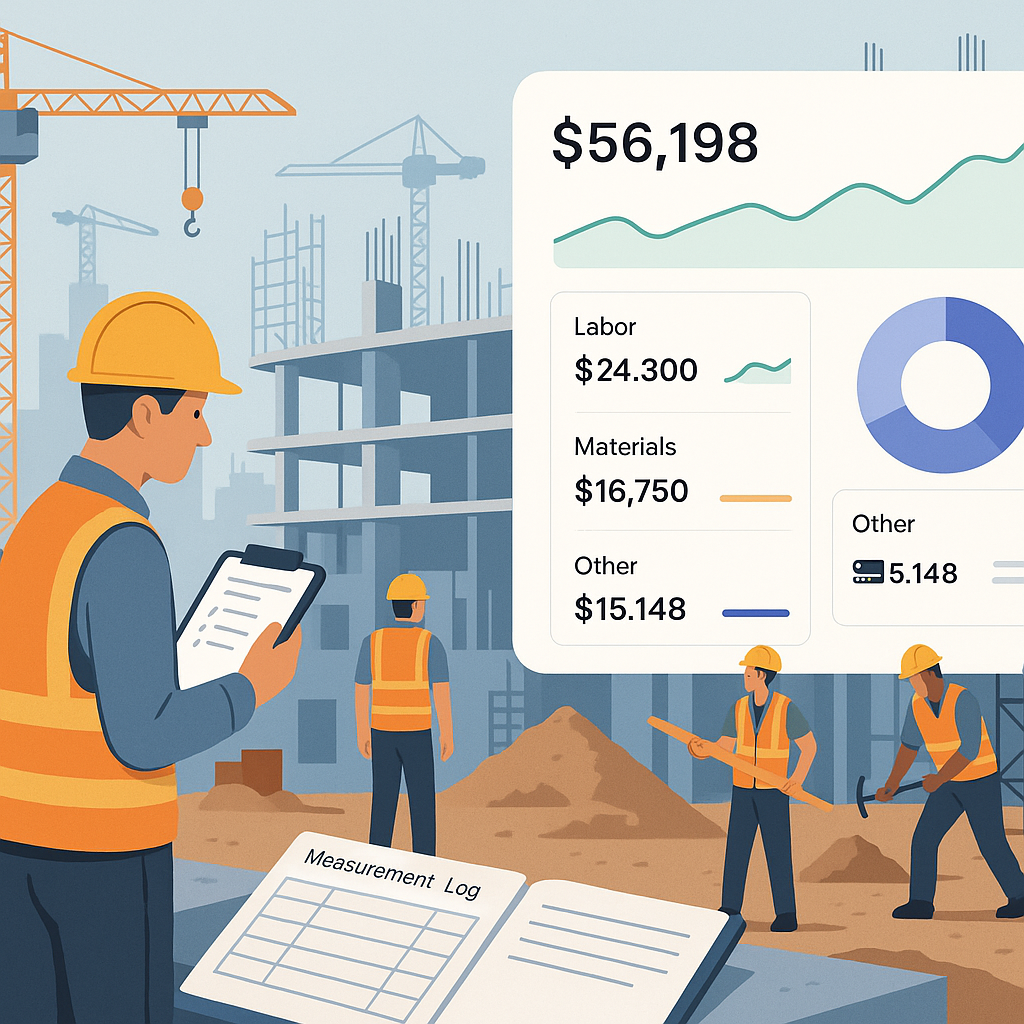
Why Construction Projects Bleed Money: The Silent Profit Drains
Ask any contractor why their project lost money, and they’ll tell you it’s because of “unexpected costs.” But let’s be honest—most of those “unexpected costs” aren’t unforeseen at all. They’re predictable, avoidable, and often hiding in plain sight.
In my experience, contractors miss these profit drains because they’re too busy firefighting daily issues. And the consequences are brutal: margins shrink, cash flow takes a hit, and projects spiral into loss territory.
Let’s break down seven hidden profit drains contractors often miss—and what you can do about them.
1. Bad BOQ Rate Analysis
Here’s a scenario I see all the time: the quoted rate for an item looks good on paper, but the actual cost rate during execution blows it out of the water. Why? Poor BOQ rate analysis.
A robust system compares multiple rate dimensions—quoted, billing, scheduled, budgeted, and actual cost—to catch discrepancies early. Without this, you’re flying blind. You might think you’re making money, but the margins are quietly eroding.
For example, a contractor working on a high-rise building in Dubai quoted $50 per square meter for tiling. By the time the project was halfway through, the actual cost had ballooned to $62 per square meter, thanks to untracked labor overruns and material price hikes. A proper BOQ analysis could have flagged this discrepancy early, saving nearly $60,000.
Actionable Step: Use software tools like JobNext’s BOQ Rate Analysis feature. It highlights items where actual costs exceed estimates, allowing you to address pricing or procurement issues before it’s too late. Their case study on AI-driven cost tracking shows how real-time monitoring saved margins on a $1.2B factory project in Texas.
2. Manual Procurement Chaos
Procurement is where many contractors lose control. Materials are ordered late, vendor selection is subjective, and duplicate orders pile up. The result? Wasted budget, delayed timelines, and frustrated teams.
An effective Material Requisition (MR) → RFQ → PO workflow is key. It enforces budget validation and approval chains. Plus, it minimizes human error by routing smartly to existing stock before buying new materials.
In India and GCC, contractors lose lakhs to procurement chaos every year. For example, a mid-sized contractor in Bangalore lost ₹25 lakhs on a single project due to double-ordering steel and cement. JobNext explains this problem in detail, showing how integrated systems can prevent these leaks and streamline workflows.
Actionable Step: Implement a digital procurement solution that integrates budgets and approval workflows. This ensures you only purchase what’s necessary, at the right price, and at the right time.
3. Inconsistent Subcontractor Management
Subcontractors are notorious for driving costs up. Without proper measurement tracking, payments spiral out of control. Late bills, disputes over scope, and unreconciled material consumption can hit your bottom line hard.
For instance, a contractor in Oman faced a $200,000 overpayment dispute with a subcontractor due to untracked quantities. The scope creep wasn’t identified until it was too late.
One fix: implement a system that tracks subcontractor measurements in real-time. Tools like JobNext allow you to create detailed measurement sheets, attach evidence like photos, and ensure cumulative totals don’t exceed agreed work order quantities. This eliminates disputes and keeps costs predictable.
Actionable Step: Audit your subcontractor management process. Ensure all measurements are tracked, verified, and reconciled before payments are approved.
4. Resource Budget Burn
Most contractors don’t know where their resources are actually going. Labor costs, material usage, equipment downtime—these can silently bleed your budget if you’re not tracking them.
Take the case of a road construction project in Texas. The contractor underestimated labor hours by 15% and forgot to account for equipment idle time, leading to a $300,000 budget overrun.
A good ERP system provides detailed budget variance reports. For example, JobNext’s Resource Reconciliation report compares actual vs. budgeted costs across labor, material, plant, subcontractor, and overhead. Their data shows that catching these variances early can save contractors millions.
Actionable Step: Start tracking labor, material, and equipment usage daily to identify patterns in resource wastage.
5. Revenue Leakage in Billing
Billing errors are a silent killer. Missed invoices, incorrect methods, or delayed bills can lead to massive revenue leakage.
A contractor in Mumbai lost ₹40 lakhs in a year because they didn’t bill for extra work orders promptly. By the time they realized the mistake, the client refused to pay.
JobNext offers six billing methods—including RA Bills, stage-wise, and monthly billing—that ensure no revenue falls through the cracks. Their blog on billing chaos breaks it down further.
Actionable Step: Review your billing process. Automate invoice generation and ensure extra work orders are tracked and billed immediately.
6. Compliance Gaps
GST, TDS, PF, ESI—statutory compliance isn’t optional, but many contractors treat it like an afterthought. One missed deadline can lead to penalties and audits that eat into your margins.
For instance, a contractor in Chennai was hit with a ₹10 lakh penalty for missing TDS filing deadlines.
JobNext integrates compliance tracking directly into its workflows. GST/TDS deductions, statutory reporting, and bank guarantee tracking are automated, reducing human error and saving time.
Actionable Step: Designate a compliance manager or use software to automate statutory filings and reminders.
7. Equipment Underutilization
Idle equipment doesn’t just sit there—it burns money. Contractors often buy or lease expensive machinery, only to underutilize it because they lack proper tracking.
For example, an excavator costing $250,000 was used for only 40% of its capacity on a project in Qatar. This translated to a loss of $75,000 in potential ROI.
Asset lifecycle management can fix this. JobNext tracks equipment from procurement to disposal, ensuring it’s used efficiently. It even monitors depreciation to optimize ROI.
Actionable Step: Regularly review equipment utilization reports to identify idle assets and either redeploy or sell them.
How Contractors Can Stop Losing Money
You don’t need to overhaul everything overnight. Start small:
- Review your BOQ margins weekly.
- Implement structured procurement workflows.
- Track subcontractor measurements promptly.
- Automate compliance checks.
- Monitor equipment utilization regularly.
These aren’t just best practices—they’re essential steps to protect your margins.
If you’re dealing with any of these issues, JobNext can help. Get started free →
FAQ
Q: How does BOQ rate analysis help profitability?
A: It catches discrepancies between estimated and actual costs early, allowing corrective action before margins erode. For example, catching a 10% cost overrun early can save thousands on larger projects.
Q: What’s the biggest procurement mistake contractors make?
A: Manual workflows. They lead to unauthorized purchases, late orders, and duplicate stock. Automation avoids these pitfalls.
Q: Can subcontractor management really save money?
A: Absolutely. Accurate measurement tracking prevents overpayment, reduces disputes, and creates accountability.
Q: Is compliance automation worth it for small contractors?
A: Yes. Even one missed GST or TDS deadline can result in fines that wipe out months of profit. Automation ensures deadlines aren’t missed.
Q: What’s the ROI on equipment tracking?
A: Proper utilization and depreciation tracking ensure machinery delivers value over its lifecycle. For example, optimizing usage can extend the life of equipment by 20%.
Final Thoughts
Profit drains are everywhere in construction. Catching them early isn’t just smart—it’s necessary. Tools like JobNext make it easier to track costs, prevent revenue leakage, and manage resources efficiently.
Discover how JobNext can protect your margins →
Learn more at JobNext.ai - Construction ERP