ERP Implementation Best Practices for Contractors
Implementing an ERP is like pouring the foundation for a skyscraper. Get it wrong, and the cracks will show in every project. But get it right, and you’ll build an efficient, scalable business. As consultants who've deployed ERP systems in over 200 construction firms, we’ve seen what works — and what doesn’t. Here’s what you need to know.
1. Start with Your Processes, Not the Software
Too many contractors dive into ERP thinking it’ll magically fix chaos. It won’t. If your procurement system is a mess on paper, digitizing it won’t help. Start by mapping out your workflows. For instance:
- How do material requests (MRs) flow today?
- Who approves RFQs and purchase orders?
- Are subcontractor measurements linked to payments?
If you don’t know, stop. Fix your processes first. Tools like JobNext can help later, but only if your workflows are clear. This post on why contractors lose money without cloud ERP explains why poor cost tracking stems from broken processes, not just bad software.
2. Get Leadership Buy-In Early
ERP isn’t an IT project. It’s a business transformation project. If your MD or Operations Head isn’t on board, don’t proceed. Why? Because ERP will require changes to how your team works — and those changes will face resistance. Leadership needs to back the project publicly and enforce accountability when people push back.
3. Focus on Margins, Not Features
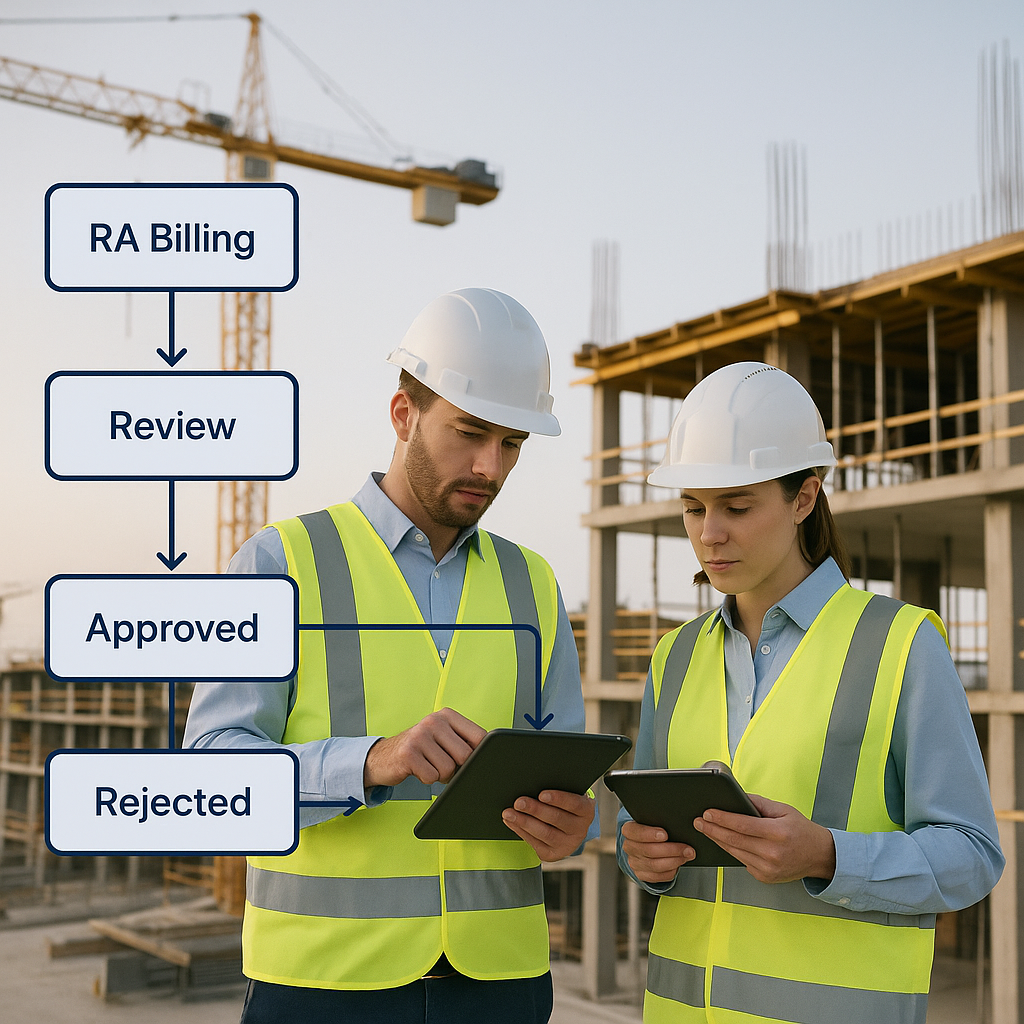
What’s the #1 reason contractors implement ERP? Margins. Not dashboards or pretty reports. You need real-time visibility into costs, billing, and profitability. Features like JobNext’s 6 billing methods (RA Bills, stage-wise, monthly, etc.) are critical because they ensure no revenue slips through.
We’ve seen contractors recover up to 10% in lost billing by switching to structured workflows. Want proof? This article on margin erosion dives into real-world examples.
4. Don’t Skip Data Cleanup
Garbage in, garbage out. If your vendor lists, item codes, or BOQs are outdated, your ERP will be useless. Allocate time (and people) to clean up data before migration. This step often takes longer than expected but is non-negotiable.
5. Train Your Team — Relentlessly
ERP implementation fails when users don’t know how to use it. Training isn’t a one-time event. It’s ongoing. Start with key users (project managers, site engineers, finance leads) and make them superusers. Then cascade training down.
6. Phase the Rollout
Don’t implement everything at once. Start with one module or process — like procurement — and scale from there. This phased approach reduces risk and gives your team time to adapt. For example, roll out the MR → RFQ → PO workflow first. Nail it. Then move to billing or subcontractor management.
7. Track Success with Real Metrics
How do you know if your ERP is working? Use metrics. Examples:
- Time to process an MR (before vs. after ERP)
- % of approved RFQs linked to POs
- Variance between estimated and actual costs in BOQs
ERP isn’t about implementing software. It’s about improving business outcomes. Measure them.
Final Thoughts
ERP implementation is hard, but it’s worth it. The contractors who get it right don’t just save time — they protect their margins. And with tools like JobNext, you’re not just buying software. You’re investing in structured workflows that actually work. Ready to learn more? Check out JobNext’s guide to digital transformation.
Ready to see JobNext in action?
Multi-tenant SaaS ERP for construction, facilities management, and contracting — covering preconstruction, project execution, procurement, HR & payroll, equipment, finance, and 150+ analytics reports.
Get Started Free →Learn more at JobNext.ai