Why Most Construction ERP Implementations Fail
Here’s the hard truth: most ERP implementations in construction fail to deliver the promised results. Why? Either the software doesn’t fit your workflows, or your team isn’t ready to change how they work. Both are avoidable — if you start with the right strategies.
We’ve been part of over 200 ERP deployments for contractors across EPC, MEP, HVAC, and other trades. We’ve seen what works, and more importantly, what doesn’t. Below are seven best practices to make sure your ERP implementation actually pays off.
1. Start With a Clear Scope (And Stick to It)
Too many contractors go live with half-configured systems. Why? Because they try to implement everything at once. Don’t do this. Instead, start with the modules that immediately solve your biggest pain points. For most contractors, that’s procurement or project cost tracking.
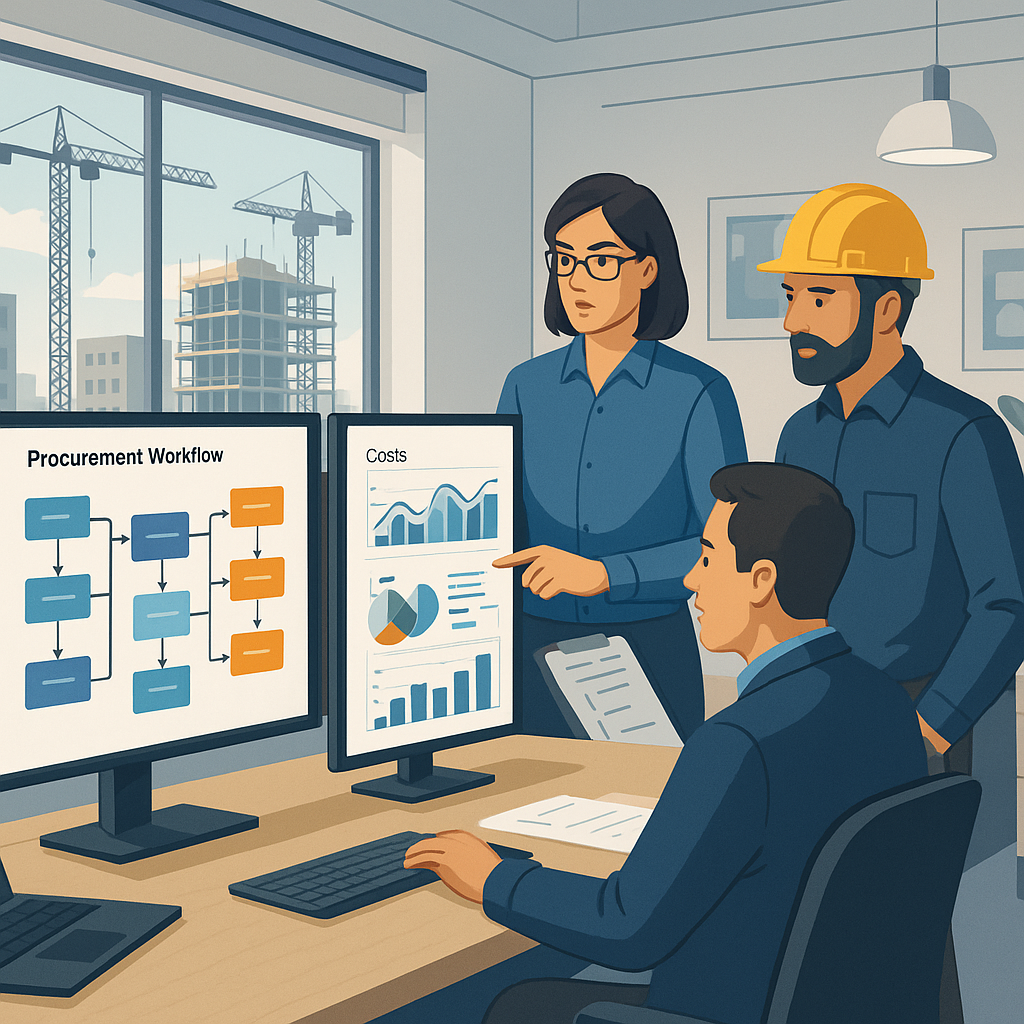
Take a real example: one mid-sized MEP contractor we worked with was bleeding margins because of manual procurement chaos. Purchase requests were lost, vendor quotes went unrecorded, and POs were delayed. We rolled out structured procurement workflows first — MR → RFQ → Vendor Offers → PO — and saved them about 12% on material costs in six months. (You can read more about this in this case study from JobNext.)
Focus on one or two critical areas. Nail those before expanding.
2. Standardize Workflows Before Automation
Here’s a mistake we see all the time: companies try to automate broken processes. If your teams don’t already follow consistent workflows, an ERP won’t magically fix that. In fact, it’ll make things worse.
Let’s say you’re tracking subcontractor payments. If you don’t already have a process for measuring work progress (e.g., based on BOQ or actual site measurements), the ERP’s subcontractor module will be useless. First, define those rules. Then, configure the system to enforce them.
If you’re not sure where to start, this guide on stopping revenue leakage with cloud ERP breaks it down step by step.
3. Assign Owners for Every Module
ERP systems fail because no one takes ownership. Every module — from HR to billing — needs an internal champion who understands both the software and your business. Their job? To make sure the module is configured properly and that the team uses it.
For example, during a recent implementation, we saw an operations manager take charge of the Job Setup module. He worked closely with site engineers to define BOQ/WBS hierarchies, ensuring every scope of work was measurable. The result? Real-time visibility into project profitability, which had been non-existent before.
Pick the right people. Train them properly. Hold them accountable.
4. Don’t Skip Data Cleanup
Bad data will kill your ERP rollout. Period. Before you even think about going live, clean up your existing records. That means fixing duplicate vendor entries, standardizing material codes, and reconciling unpaid invoices.
One contractor we worked with had over 300 duplicate entries for the same vendor — each with different GST numbers. It took two months to clean up, but it saved them from major compliance headaches later. Imagine trying to generate accurate GST reports with that kind of mess.
5. Test Every Workflow (Not Just the Software)
Your ERP vendor will test the software. That’s not enough. You need to test the workflows — from start to finish.
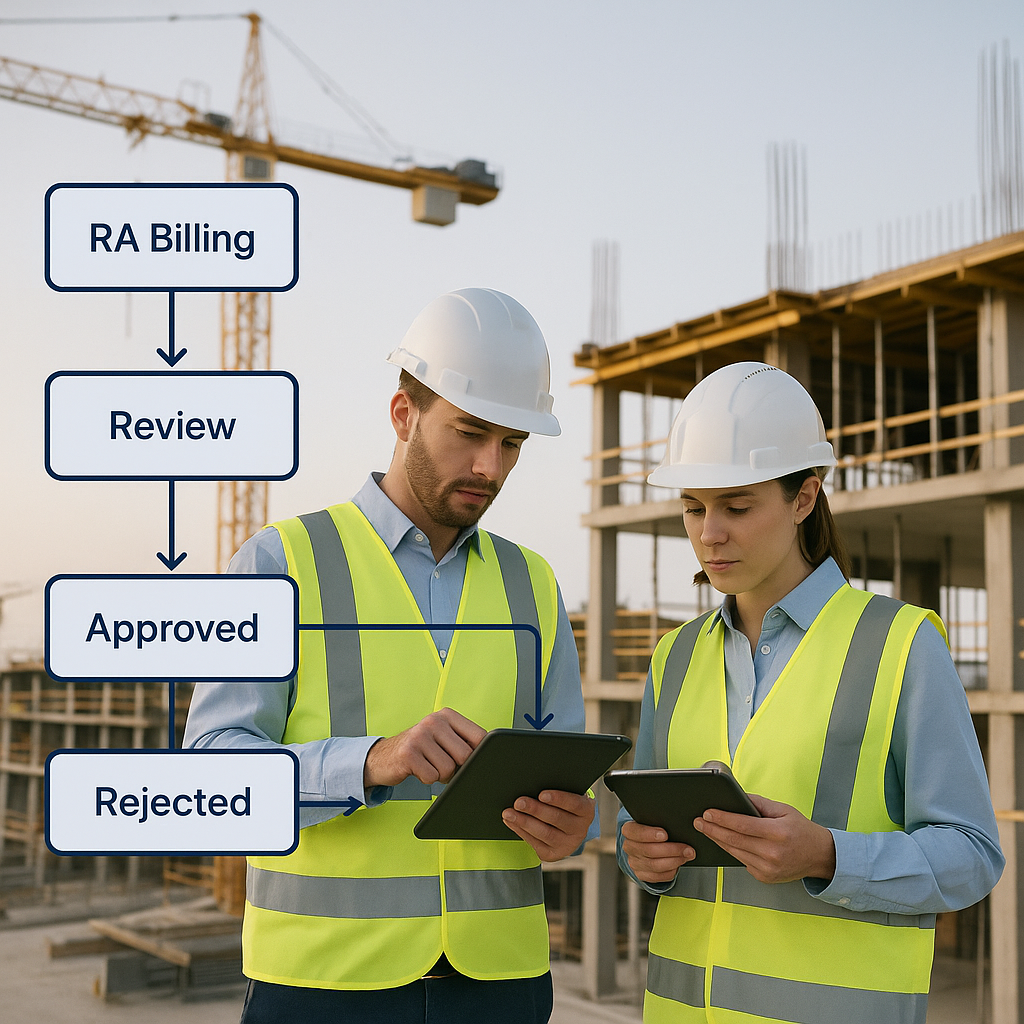
For instance, if you’re implementing the billing module, test all six billing methods: RA Bills, stage-wise, monthly, supply BOQ, combined, and one-time. We once saw a contractor miss out on billing for extra work because they hadn’t tested the combined billing method properly during implementation. Don’t let that happen to you.
6. Train Your Team (And Keep Training)
ERP systems are only as good as the people using them. Training is not a one-time event. It’s an ongoing process.
Start with the basics: how to create a material request, how to approve a subcontractor invoice, how to track project profitability. Then, dive deeper into advanced features like multi-currency support or bank guarantee tracking.
A good rule of thumb? Schedule quarterly refresher sessions. And don’t be afraid to replace users who resist adoption. It sounds harsh, but it’s better than letting them derail the system.
7. Measure Results Post-Go-Live
How do you know your ERP is working? Measure it. Define KPIs before you go live, and track them continuously.
For example, after implementing JobNext’s procurement module, one contractor reduced their RFQ-to-PO cycle time from 14 days to 5. That’s a clear, measurable win. Other KPIs to track might include:
- Material cost variance (vs. original BOQ estimates)
- Subcontractor payment delays
- Billing cycle time
If you’re not seeing improvements, something’s wrong. Fix it fast.
Final Thoughts
ERP implementation isn’t easy, especially in construction. But with the right approach, it can transform your business. Focus on fixing your biggest pain points first, standardize processes, and measure results. And if you’re still on the fence about whether ERP is worth it, check out this post on why contractors can’t afford to ignore cloud ERP in 2024.
The bottom line? Done right, ERP is a game-changer. Done wrong, it’s a disaster. Do it right.
Ready to see JobNext in action?
Multi-tenant SaaS ERP for construction, facilities management, and contracting — covering preconstruction, project execution, procurement, HR & payroll, equipment, finance, and 150+ analytics reports.
Get Started Free →Learn more at JobNext.ai