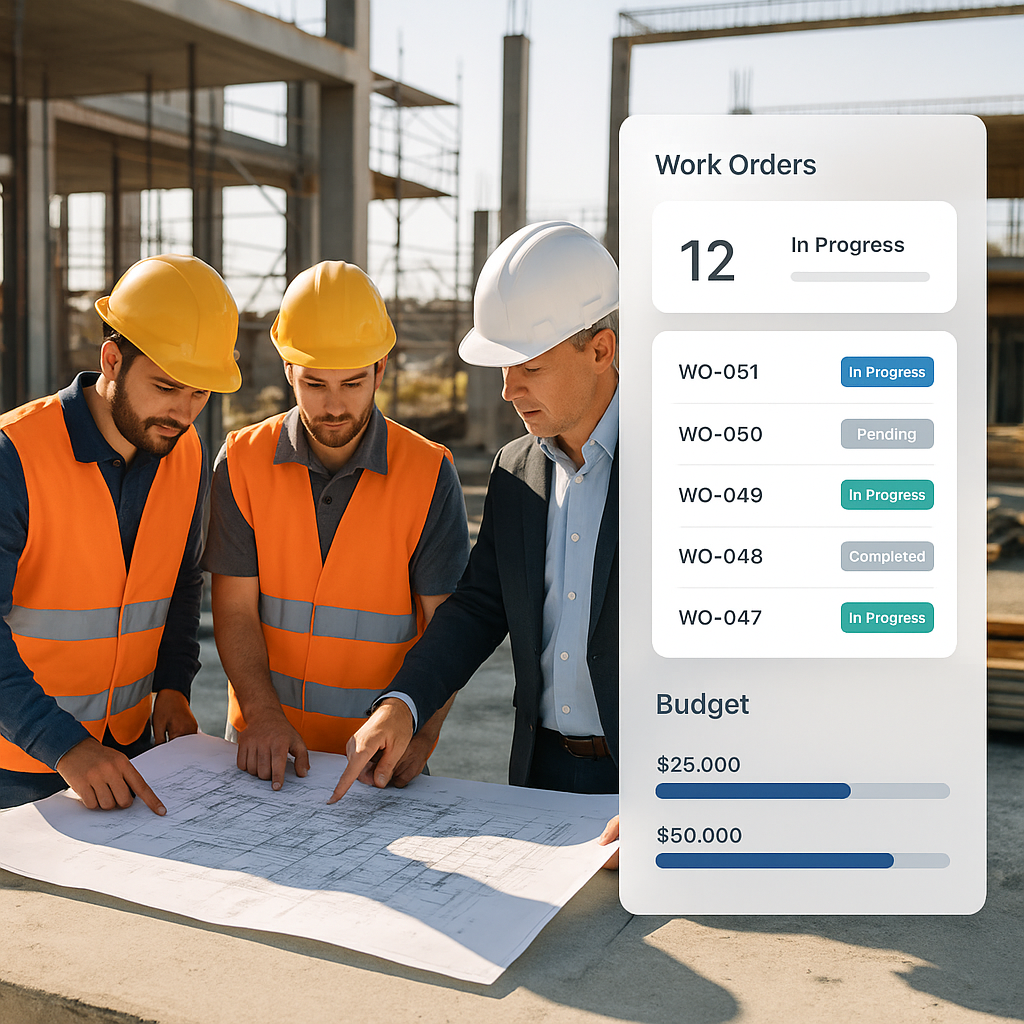
Procurement Chaos: The Silent Profit Killer
Every contractor knows the drill: a project is delayed because materials didn’t arrive on time. Or worse, you overpaid for something you don’t need yet. These aren’t just annoyances—they’re bleeding your margins.
Let’s talk numbers. The average small-to-mid-size contractor loses up to ₹25 lakh annually due to procurement inefficiencies. That’s not me saying it—it’s backed by industry reports like those from Epicflow and Acupower. And we’ve seen it firsthand during ERP implementations.
Why does this happen? Procurement is messy without structure. You’ve got material requisitions (MRs) flying around in emails, RFQs sent to vendors without approval chains, and purchase orders (POs) created without budget checks. The result? Late deliveries, duplicate orders, and inflated costs.
The Fix: Structured Procurement Workflows
A structured workflow isn’t just a nice-to-have—it’s a must-have. Here’s what it looks like:
- Material Requisition (MR): Every purchase starts here. No MR, no RFQ.
- Request for Quotation (RFQ): Vendors submit offers. Comparative statements help you select the best price and terms.
- Purchase Order (PO): Only create POs for approved RFQs. Attach supporting documents like vendor quotes and technical specs.
- Approval Chains: Get sign-offs at every stage. Multi-level approvals prevent rogue spending.
Why Structured Workflows Matter
Without workflows, procurement decisions often rely on gut instinct or rushed decisions. For example, imagine a site engineer needing a specific type of cement urgently. Without a structured process, they might send an email to a vendor they met once, skipping price comparisons or quality checks. This ad-hoc approach leads to inflated costs and procurement errors.
A contractor in Bengaluru implemented structured workflows using JobNext and saw measurable results. By enforcing the MR → RFQ → PO pipeline, their procurement errors dropped by 32% in six months. Additionally, their audit compliance improved because every step had an audit trail.
Actionable Steps to Build Structured Procurement Workflows
- Map Your Current Process: Identify how your team currently handles requisitions, vendor comparisons, and purchase orders.
- Define Roles & Responsibilities: Assign clear roles to your procurement team. Who raises the MR? Who approves it? Who sends RFQs?
- Use Technology: Implement ERP platforms like JobNext to enforce workflows automatically.
- Train Your Team: Without proper training, even the best system will fail. Provide hands-on training for all users.
- Monitor & Optimize: Use reports from your ERP system to analyze bottlenecks and optimize workflows regularly.
Common Pitfalls and How to Avoid Them
Even with the best workflows, mistakes happen. Here’s what we’ve seen derail ERP success:
1. Skipping Vendor Verification
One contractor in Oman lost ₹6 lakh to a vendor with an invalid GSTIN. Vendor verification is crucial to avoid fraud or compliance issues. Always verify:
- GSTIN and tax identification numbers.
- Bank account details.
- Past performance and references.
Actionable Tip: Use ERP systems that include vendor management modules. These systems can flag incomplete or invalid vendor information automatically.
2. Unrealistic Delivery Dates
Long lead times for imported materials often catch contractors off guard. For example, a contractor in Chennai faced a 10-day project delay because they underestimated shipping times for HVAC equipment from China.
Actionable Tip: When setting delivery timelines, include all three date fields:
- Ready Date: When the vendor can hand over the material.
- Ship Date: When shipping will commence.
- Arrival Date: When the material is expected to reach the site.
3. Overusing Quick Orders
Quick orders bypass the standard workflow and should only be used in emergencies. Overusing them leads to uncontrolled spending and procurement chaos.
Case Study: A mid-size contractor in Pune was bleeding ₹3 lakh annually due to uncontrolled quick orders. By limiting quick orders to 5% of total procurement volume, they cut unnecessary expenses significantly.
Actionable Tip: Use your ERP system to restrict quick orders for high-value purchases. Set thresholds for when quick orders require managerial approval.
Why ERP is Non-Negotiable
Manual systems can’t handle the complexity of modern procurement. ERP platforms like JobNext don’t just digitize the process—they enforce best practices. Here’s how:
1. Budget Checks
Before approving a PO, JobNext can run a Material Budget Burn report to ensure spending fits the project budget. This prevents overspending at the project level.
2. Audit Trails
Every transaction, from RFQs to POs, is logged for compliance and future reference. This is invaluable during audits or disputes.
3. Vendor Categorization
Proper categorization helps filter vendors by type (e.g., local vs. international) and track performance. For instance, a contractor in Delhi used this feature to identify underperforming vendors and renegotiate contracts.
4. Real-Time Reporting
ERP systems provide real-time insights into procurement performance. For example, one contractor used JobNext’s dashboard to identify delays in RFQ approvals, which were holding up POs.
Actionable Tip: If you’re not ready for a full-scale ERP, start with modular systems that focus solely on procurement. Expand to other modules as your team becomes comfortable.
When ERP Implementation Goes Wrong
You might be thinking, “What if the ERP itself becomes part of the problem?” It’s a valid concern. ERP failures usually stem from poor planning, not poor software.
Common ERP Implementation Mistakes
- Skipping Planning: Implementing ERP without stakeholder input leads to poor adoption.
- Underestimating Training Needs: Employees must be trained thoroughly to use the system correctly.
- Ignoring Data Clean-Up: Migrating inaccurate data into a new system only exacerbates the problems.
How to Ensure ERP Success
- Set Up Masters Before Go-Live: Configure vendor, material, and Chart of Accounts masters prior to launching the system. Changing these mid-project causes confusion.
- Enforce Workflows from Day One: Don’t let users bypass the system. Train them to follow the MR → RFQ → PO path religiously.
- Document Numbering: Plan numbering schemes carefully. Changing them after transactions start creates audit nightmares.
Real-World Example: Saving ₹18 Lakh in Procurement Costs
A contractor specializing in HVAC systems in Mumbai adopted JobNext’s procurement module. Before implementation, their procurement team relied on spreadsheets and email chains. Within a year, the structured MR → RFQ → PO workflow saved them ₹18 lakh in over-budget purchases and late fees. The Material Budget Burn report alone prevented ₹2 lakh in overspending on a single project.
Decision Framework: Is ERP Right for Your Business?
| Question | If Yes | If No |
|---|---|---|
| Do you manage more than 3 projects at a time? | ERP can help centralize procurement and budgeting. | Manual processes may still suffice. |
| Do you lose money to duplicate or late orders? | ERP is ideal for enforcing structured workflows. | Focus on improving manual processes first. |
| Are vendors frequently non-compliant? | Use ERP to enforce vendor verification processes. | Consider vendor management tools. |
| Is your team tech-savvy? | An ERP will be easier to implement. | Invest in training before implementing ERP. |
FAQ
Q: Can I implement ERP procurement workflows without disrupting ongoing projects? A: Yes. Start with one project as a pilot. Gradually onboard others once the team is comfortable.
Q: What happens if a vendor refuses to follow my RFQ process? A: Consider switching vendors. In the long term, structured workflows save money and time.
Q: Are ERP systems suitable for small contractors? A: Absolutely. Tools like JobNext are designed for companies with 50-2000 employees running multiple concurrent projects.
Q: How do I convince my team to follow the new workflow? A: Show them the money. Highlight how much manual procurement errors cost the company last year.
Q: What’s the biggest risk during ERP implementation? A: Skipping training. ERP workflows aren’t intuitive—they require proper user onboarding.
Citations
- Epicflow: Data on procurement inefficiencies
- Acupower: ERP best practices framework
- JobNext Blog: ₹25 Lakh Lost to Procurement Chaos: Real-world examples of structured workflows
- JobNext Documentation: Workflow enforcement details
- Deskera: ERP planning insights
Learn more at JobNext.ai - Construction ERP