



ERP Implementation Best Practices for Construction
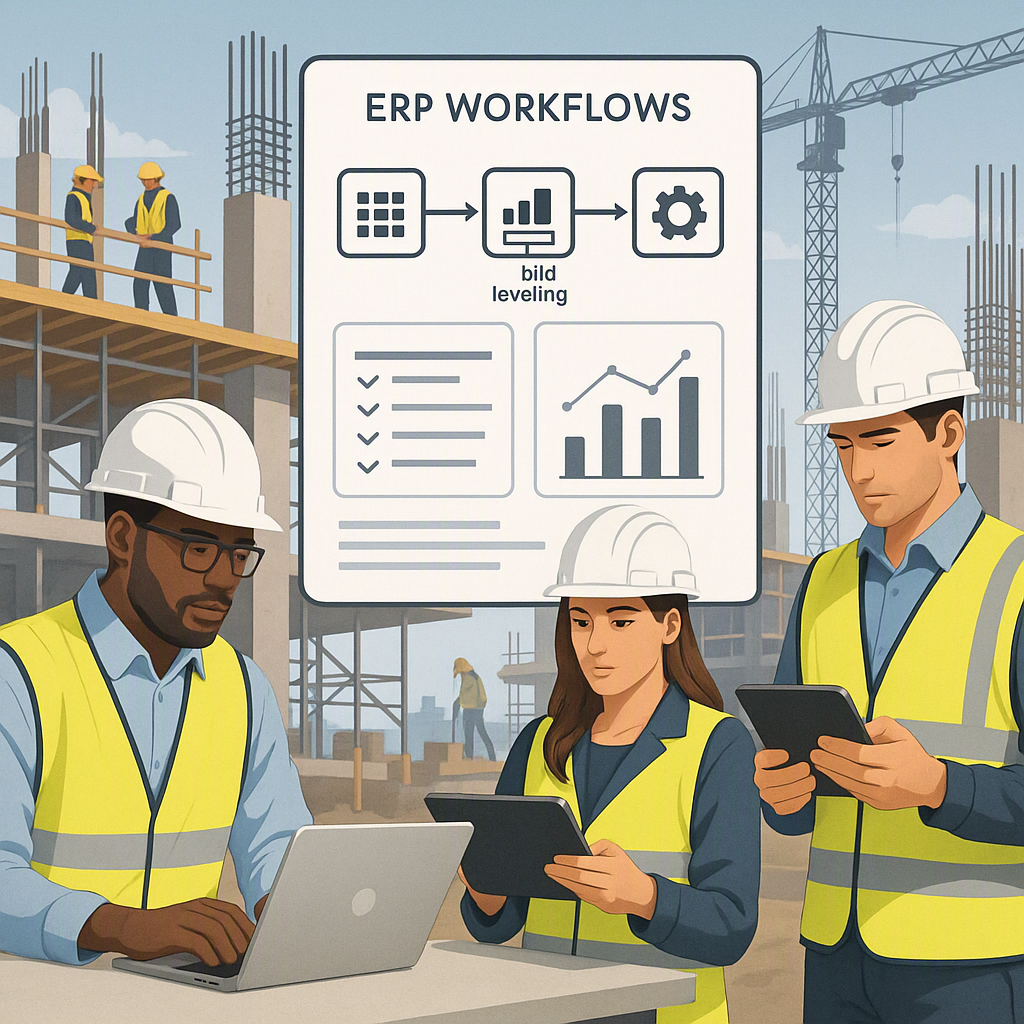
Why ERP Projects Fail in Construction
ERP implementation in construction can be challenging due to tight schedules, complex projects, and high stakes. Common reasons for failure include scope creep, rushed data migration, and user resistance. Understanding these pitfalls can help construction companies avoid them and achieve successful ERP deployment.
Define Goals, But Keep It Realistic
Many construction companies overestimate their needs during ERP selection, leading to over-scoping and underutilization. Instead, focus on defining clear goals that address specific pain points. For example, if your team struggles with rate lookups or BOQ management, prioritize tools that simplify those workflows. Choosing industry-specific platforms can reduce unnecessary complexity and improve efficiency.
Data Migration: Don’t Wing It
Data migration is a critical phase in ERP implementation and often a source of failure. Ensuring your data is clean, complete, and ready for import is essential. Allocate sufficient resources to this phase and consider tools that assist with error detection and data preparation to streamline the process.
User Adoption: A Key Success Factor
Even the best ERP system can fail if users resist adopting it. Construction teams often rely on familiar tools like Excel, making the transition to ERP challenging. To improve adoption, focus on training and demonstrating tangible benefits. Start with one workflow and show how it saves time or reduces errors, gradually building trust in the system.
Common Mistakes (And How to Avoid Them)
- Underestimating Costs: ERP implementation involves software, training, migration, and ongoing support. Budget comprehensively.
- Skipping Customization: Generic ERPs may not meet construction-specific needs. Choose platforms tailored to your industry.
- Overloading Users: Introduce features gradually to avoid overwhelming your team.
- Neglecting Post-Go-Live Support: Plan for ongoing updates and training to ensure long-term success.
FAQ
Q: How long does ERP implementation take in construction?
A: Typically 6-12 months, depending on scope and team size. Smaller deployments can be faster.
Q: Can small contractors benefit from ERP?
A: Yes, ERP systems can be tailored to meet the needs of smaller firms.
Q: What’s the best way to train my team?
A: Start with one workflow, demonstrate tangible benefits, and expand gradually.
Q: How do I handle scope creep?
A: Define clear goals upfront and stick to them. Avoid adding features mid-project.
Q: Is ERP worth the cost?
A: Yes—if implemented correctly, ERP systems can save time, reduce errors, and improve margins.
Call to Action
If ERP implementation feels daunting, consider exploring tools designed specifically for the construction industry. These platforms can simplify workflows like BOQ parsing, rate analysis, and bid leveling, helping you achieve a smoother implementation process.
Learn more at JobNext.ai - Construction ERP
Put this into a real BOQ
Describe your project and get a complete, costed Bill of Quantities in about a minute — free to start.