


Mastering Multi-Country BOQ Estimation: Standards, Tools, and Methods
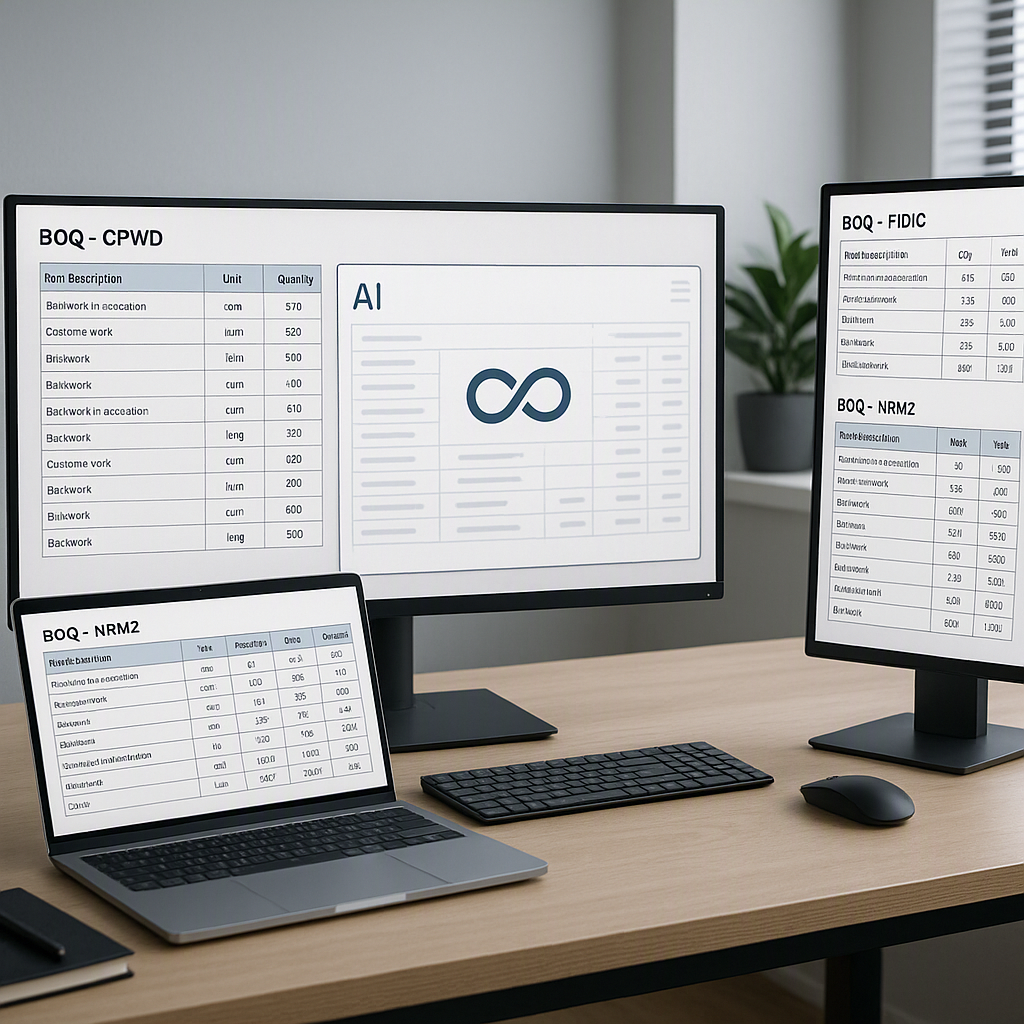
Mastering Multi-Country BOQ Estimation: Standards, Tools, and Methods
Let’s start with a common scenario: You’re managing a multi-country construction project. The client sends over a tender document with a 200-line BOQ (Bill of Quantities). Sounds straightforward, right? Except it’s not. The BOQ uses CPWD standards from India, but the project is in the UAE. Labour rates follow GCC norms, and materials are priced in USD. You’re expected to reconcile all this into a single, defensible estimate. Oh, and the deadline? Three days.
If this feels like a nightmare, you’re not alone. Multi-country BOQ estimation is one of the most challenging aspects of preconstruction. But it doesn’t have to be. Tools and structured methods are changing the game, making it faster and more accurate to navigate these complexities.
Why Multi-Country BOQ Estimation Is So Difficult
BOQs are supposed to bring structure to chaos. They list quantities, rates, and costs for every item in a project. But when you’re estimating across countries, three issues pop up almost immediately:
1. Different Standards
Construction standards vary drastically between regions, and they dictate how items are measured and valued. For instance:
- India: Uses CPWD DSR (Delhi Schedule of Rates) for public projects, which breaks down items into detailed specifications. A “concrete slab” might include material types, curing times, and reinforcement details.
- UK: Relies on NRM2 (New Rules of Measurement). Here, items are typically measured in elemental formats, emphasizing cost planning over detailed descriptions.
- GCC: Often follows FIDIC or contractor-specific templates, which can vary even within the region.
An item measured as one square meter in one country might be measured in cubic meters in another. This discrepancy leads to confusion and inaccuracies if not addressed properly.
2. Currency Conversions
When estimating across borders, you’ll likely deal with multiple currencies:
- Material Costs: Often quoted in USD, especially for imported goods.
- Labour Rates: Typically in local currencies (e.g., INR for India, AED for UAE).
- Equipment Rentals: These may vary between local and international suppliers.
Exchange rates, inflation, and fluctuating market conditions add complexity. For example, a sudden depreciation in the local currency can drastically alter your estimate in real terms.
3. Rate Adjustments
The cost of key materials like steel, cement, and aggregates varies significantly by region. Labour productivity also depends on local conditions, such as climate and workforce skill levels.
If you don’t account for these variations, your BOQ risks being wildly inaccurate and may lead to disputes or rejected proposals.
How Tools Handle These Challenges
This is where specialized tools come in. Unlike Excel or traditional ERP systems, they’re purpose-built to handle the multi-country complexity of BOQs. Let’s break down how they work and why they’re essential.
1. Standardized BOQ Parsing
The first hurdle in multi-country estimation is understanding the structure of the BOQ itself. Different standards use different formats and measurement rules. Automated parsing tools simplify this process.
Here’s how:
- They recognize section headers (e.g., Earthwork, Concrete, Finishing) and arrange items hierarchically.
- They identify units of measurement, ensuring consistency across formats (e.g., m³ vs. cubic yards).
- They allow you to convert BOQs between standards—for instance, mapping CPWD items to NRM2 equivalents.
Actionable Step: Use tools that support standard conversion and mapping to minimize manual reformatting. This alone can save hours or even days per project.
2. Semantic Rate Matching Across Regions
Rate matching is often the most time-consuming part of estimation. Specialized tools use semantic search to streamline the process.
How it works:
- You enter an item like “concrete slab with reinforcement.”
- The tool retrieves rates from regional catalogs (e.g., CPWD DSR for India, RSMeans for the US).
- It provides adjustment options for inflation, productivity factors, and transportation costs.
Actionable Step: Look for tools that integrate with updated rate catalogs and APIs for real-time adjustments. This ensures your estimates reflect current market conditions.
3. Multi-Currency Handling
Currency conversion is another area where tools excel. They simplify calculations by:
- Sourcing exchange rates from reliable financial APIs.
- Allowing adjustments for regional inflation.
- Providing the ability to lock rates for specific items, such as imported bulk materials.
Actionable Step: Use tools that maintain an audit trail for currency conversions. This is vital for defending your estimates in case of disputes.
4. What-If Scenarios
Multi-country projects often require quick iterations to adapt to changing conditions. Automated tools enable real-time updates.
For example:
- Adjust steel prices by 10%, and see how it impacts the entire BOQ.
- Switch labour sources from imported to local and instantly recalculate costs.
Actionable Step: Use tools that allow scenario modeling. This helps you present alternate estimates to clients or stakeholders without manual recalculations.
Common Mistakes in Multi-Country Estimation (and How to Avoid Them)
Even with the best tools, errors can creep in. Here are four common pitfalls and actionable ways to avoid them:
1. Ignoring Regional Productivity Differences
Labour productivity varies widely. For example, a task that takes 8 hours in one region might take 12 hours in another due to workforce skill levels or local working conditions.
How to Avoid: Use local benchmarks for productivity rates wherever possible. Tools with regional adjustment features can help.
2. Overlooking Tax and Regulatory Costs
Import duties, VAT, and compliance fees can add significant costs to a project. These are easy to miss when estimating across countries.
How to Avoid: Research tax structures and regulatory requirements for each region. Many tools allow you to input these values directly.
3. Using Outdated Rate Schedules
Rates from old catalogs won’t reflect current market conditions, leading to underpricing or overpricing.
How to Avoid: Use tools that integrate with updated catalogs and apply inflation adjustments automatically.
4. Mismatched Units
Mixing metric and imperial units can lead to massive errors. For example, confusing square feet with square meters can inflate or deflate costs drastically.
How to Avoid: Standardize all measurements in your BOQ. Tools with unit conversion capabilities can ensure consistency.
Decision Framework: Choosing the Right Tool for Multi-Country BOQ Estimation
| Feature | Basic Tools (e.g., Excel) | Specialized BOQ Tools |
|---|---|---|
| Standard Conversion | Manual | Automated |
| Currency Handling | Limited | Advanced |
| Rate Matching | Manual | Semantic Search Enabled |
| Scenario Modeling | Manual | Real-Time Adjustments |
| Audit Trails | None | Comprehensive |
| Integration Options | Limited | Robust API Support |
Multi-country BOQ estimation doesn’t have to be a bottleneck. With structured methods and specialized tools, you can tackle regional complexities, save time, and improve accuracy. If you're tired of juggling standards, currencies, and rates manually, exploring these tools can be a game-changer.
Learn more at JobNext.ai - Construction ERP
Put this into a real BOQ
Describe your project and get a complete, costed Bill of Quantities in about a minute — free to start.