

How AI Tools Are Transforming Construction Cost Estimation in 2026
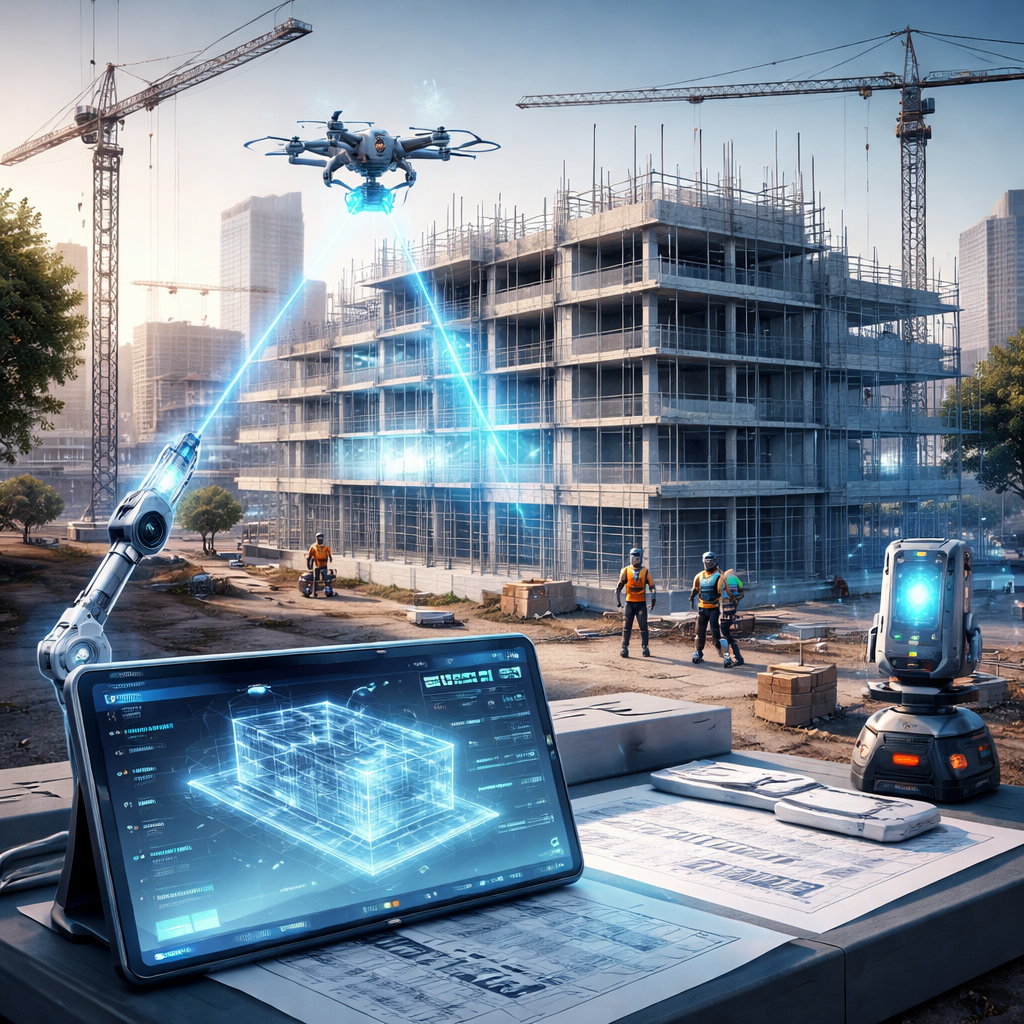
How AI Tools Are Transforming Construction Cost Estimation in 2026
Estimation in construction has always been a juggling act. I used to think that traditional methods, like unit cost and detailed estimation, were the only reliable ways to nail down costs. They felt tangible—something you could count on. But I was wrong.
The Revelation: An AI-Powered Shift
In 2026, AI tools have revolutionized the game. The turning point came when I learned about how AI can significantly reduce takeoff times. This isn’t about minor improvements; it’s about redefining the entire process.
How AI Tools Work
AI tools utilize machine learning algorithms to analyze massive datasets from past projects, extracting meaningful patterns that help predict future costs with greater accuracy. These tools can process thousands of data points in seconds, something a human estimator would take days to achieve. Moreover, AI can perform complex calculations and adjust estimates dynamically based on new data inputs, which is a game-changer in fast-paced project environments.
- Data Analysis: AI models are trained on large sets of historical data, enabling them to recognize patterns and anomalies that might not be apparent to human estimators.
- Dynamic Models: Unlike static models, AI-driven models can adjust in real-time based on new project information, thus maintaining accuracy throughout the project lifecycle.
- Automation: AI tools automate the extraction of quantities and data from digital drawings and blueprints, reducing manual input and potential errors.
Key Technologies Behind AI Estimation Tools
- Natural Language Processing (NLP): Helps in understanding and analyzing project specifications and documentation, making it easier to extract key data without manual interpretation.
- Computer Vision: Used to automate the extraction of quantities from digital drawings and blueprints, this technology allows for rapid, accurate takeoff processes.
- Predictive Analytics: Leverages historical data to forecast project costs and timelines, offering insights that can preclude costly overruns.
Why Traditional Methods Persisted
For years, methods like unit cost and detailed estimation survived because they were the industry standard. They were taught, trusted, and ingrained in the construction psyche. These methods allowed for a granular approach, analyzing every component in detail. But they were time-consuming and error-prone. In complex projects, even a small mistake could cost millions. Yet, the lack of viable alternatives kept them in place.
Comparing Traditional and AI-Driven Estimation
Let's dive deeper into the comparison:
| Feature | Traditional Methods | AI-Powered Tools |
|---|---|---|
| Time Efficiency | Slow, often days or weeks | Fast, within hours |
| Accuracy | Prone to human error | High, with data validation |
| Adaptability to Changes | Low, manual adjustments | High, automatic updates |
| Data Utilization | Limited to historical spreadsheets | Extensive, real-time analytics |
| Cost Consideration | High due to manual labor | Cost-effective with higher upfront investment |
The AI Advantage: Speed and Precision
AI tools offer a different approach. They use machine learning to analyze data from previous projects, providing more accurate estimates in less time. For example, AI can extract quantities from drawings much faster than traditional methods. AI doesn't just speed up the process; it enhances precision by using historical data to validate assumptions.
Actionable Steps to Implement AI in Estimation
-
Data Collection and Management: Ensure you have access to quality historical data, as AI models require substantial datasets for training. This involves digitizing past project records if necessary.
- Tip: Partner with data management specialists to streamline this process.
-
Tool Selection: Choose AI tools that integrate well with existing project management and accounting software. Look for tools that offer APIs for seamless integration.
- Tip: Evaluate tools based on user reviews, ease of integration, and customer support.
-
Training and Integration: Provide training for your team to effectively utilize AI tools and integrate them into your current workflow.
- Tip: Consider hiring a dedicated AI specialist or consultant during the transition phase.
-
Continuous Feedback Loop: Regularly update your AI models with new data and feedback to improve accuracy. Set up a system for collecting feedback from users to refine the models.
- Tip: Use feedback to identify areas where AI predictions diverge from actual outcomes.
Addressing Multi-Market Complexities
One of the biggest challenges in cost estimation is dealing with multi-market complexities—different standards, currencies, and regulations across countries. AI tools simplify this with features that adapt to various market needs seamlessly. This adaptability is crucial for global contractors dealing with diverse projects.
- Localization: AI tools often come with localization features that allow them to adjust for local regulations and market conditions automatically.
- Currency Conversion: Automatic currency conversion features reduce the complexity of international projects.
The ROI: Why GCs and Subs Are Making the Switch
General Contractors (GCs) and subcontractors are seeing real ROI from AI tools. These tools not only cut down the estimation time but also reduce errors that lead to costly overruns. For GCs, this means saving money per project. For subs, faster turnaround on bids increases the number of projects they can take on, boosting revenue.
Calculating the ROI of AI Tools
-
Time Savings: Quantify the reduction in hours spent on estimation and translate this into labor cost savings.
- Example: If a team of estimators reduces their workweek by 20 hours due to AI tools, calculate the hourly wage savings.
-
Error Reduction: Track the decrease in project overruns due to more accurate estimates.
- Example: Compare the costs of past overruns with current project performance metrics.
-
Bid Success Rates: Measure the increase in successful bids attributed to faster, more precise estimations.
- Example: Record the number of bids won before and after AI tool implementation and calculate the percentage increase.
Real-World Success Stories
While specific case studies are confidential, the broader industry trend shows significant time savings and increased project wins with AI adoption. This aligns with the growing trend of AI integration in construction.
Industry-Wide Impact
- Increased Competition: With AI leveling the playing field, smaller firms can compete with larger companies by delivering equally accurate and timely estimates.
- Enhanced Project Planning: Better estimates lead to more precise project planning, reducing delays and unexpected costs.
- Sustainability: With more accurate forecasting, companies can better manage resources, reducing waste and improving sustainability.
Future Trends
The future of construction cost estimation is bright and AI-driven. As AI tools become more sophisticated, we can expect even greater integration with other construction processes like project management and scheduling. This synergy will create a more streamlined workflow, reducing bottlenecks and increasing efficiency.
Emerging Technologies
- Integration with IoT: AI tools will likely integrate with IoT devices on construction sites to provide real-time updates and adjustments to estimates.
- Advanced Analytics: Future AI solutions will offer predictive maintenance features, foreseeing equipment failures and avoiding downtime.
- Augmented Reality (AR): AR could be used in conjunction with AI for on-site planning and real-time cost adjustments.
FAQs
Q: What are the different methods used for construction estimating?
A: Common methods include detailed, unit cost, and parametric estimation. Each has its pros and cons depending on the project scope.
Q: What is the most commonly used method of cost estimating?
A: Detailed estimation is often preferred for its precision, but AI tools are quickly changing this.
Q: How does AI improve accuracy in cost estimation?
A: AI uses historical data and machine learning algorithms to predict costs more accurately, reducing human error.
Q: Are AI-powered tools expensive?
A: They are often more cost-effective in the long run, reducing labor costs and increasing bid success rates.
Q: What challenges might a company face when implementing AI in cost estimation?
A: Challenges include the initial cost of tool adoption, the need for staff training, and ensuring data quality for AI learning.
Conclusion
If you're grappling with the complexities of construction cost estimation, AI tools offer a practical solution. They not only speed up the process but also provide a level of accuracy that traditional methods can't match. As AI continues to evolve, staying ahead of the curve by embracing these technologies will be crucial for success in the construction industry.
Learn more at JobNext.ai - Construction ERP
Put this into a real cost estimate
Describe your project and get a complete, costed estimate in about a minute — free to start.