



How to Perform Project Margin Analysis in Construction
How to Perform Project Margin Analysis in Construction
Margins can make or break a construction business. But let’s be honest—most contractors don’t spend enough time analyzing them. Why? Because it’s tedious, and most people are too busy fighting fires on-site. But ignoring it is a mistake. Margin fades don’t just happen—they sneak up on you. And by the time you notice, it’s too late.
Let’s fix that. In this post, we’ll break down how to perform project margin analysis step-by-step. We’ll also show you practical ways to avoid margin fade and even improve profitability over time. Ready to dive in?
What Is Project Margin Analysis (and Why Does It Matter)?
Project margin analysis is the process of tracking, evaluating, and improving the profit margins on your construction projects. It’s not the same as just looking at your final P&L report. This is about digging into the numbers during the project—not waiting until it’s over.
Why does it matter? Because every project has countless moving parts: labor costs, material price fluctuations, weather delays, and subcontractor performance. If you’re not actively tracking these, you’ll end up with margin fade—where your expected profit slowly disappears.
Step-by-Step: How to Perform Project Margin Analysis
Want to avoid scenarios where profits shrink unexpectedly? Here’s how to do margin analysis effectively:
1. Start with Accurate Cost Estimates
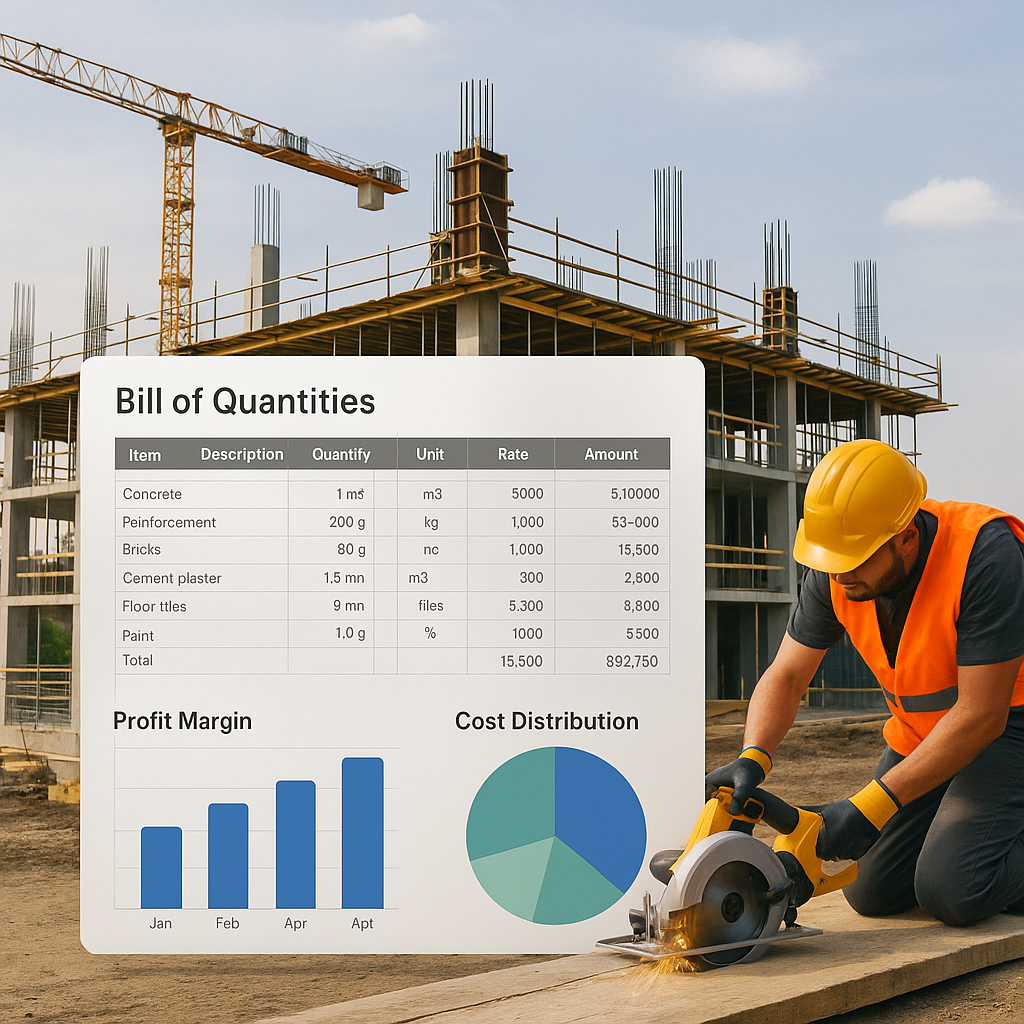
Your margin analysis is only as good as your initial estimate. If your BOQ (Bill of Quantities) is off, everything else will be too. Use tools that minimize errors during estimation.
Pro tip: Always include a contingency for volatile materials like steel and concrete.
2. Track Costs in Real-Time
Margins don’t disappear overnight—they fade over time. That’s why real-time tracking matters.
What to track:
- Labor costs: Overtime and unproductive hours.
- Material costs: Price increases or wastage.
- Subcontractor performance: Late deliveries or missed milestones.
How to track it: Use project management software with built-in cost tracking. If you’re still using spreadsheets, you’re flying blind.
3. Compare Actuals vs Estimates
Once the project starts, compare your actual costs to your original estimate. Do this weekly—not monthly.
Illustrative example — Labor Cost Overrun Analysis
| Category | Estimated Cost | Actual Cost | Variance |
|---|---|---|---|
| Foundation Labor | $50,000 | $55,000 | +$5,000 |
| Electrical Work | $30,000 | $28,500 | -$1,500 |
| Plumbing Work | $40,000 | $44,000 | +$4,000 |
| Total | $120,000 | $127,500 | +$7,500 |
Takeaway: The $7,500 overrun on labor could’ve been caught earlier if the contractor had flagged weekly variances.
4. Analyze Profit Leakage
Profit leakage happens when small, overlooked costs add up. Examples include:
- Unbilled change orders: Did you price every client request?
- Idle equipment: Are you paying for machinery you’re not using?
- Rework: How much are mistakes costing you?
Solution: Conduct a weekly profit leakage review. This could be as simple as checking:
- Pending change orders.
- Equipment utilization reports.
- Rework hours logged.
5. Adjust Margins Mid-Project
This is where most contractors fail. They assume margins are fixed once the bid is submitted. They’re not. Adjustments can be made mid-project to protect profits.
How?
- Renegotiate subcontractor rates if performance is poor.
- Reallocate resources to reduce overtime costs.
- Use markup calculators to price change orders correctly.
A common mistake is confusing markup with margin. For example, if your project costs $100,000 and you add a 20% markup, your selling price is $120,000. But your margin is only 16.67% ($20,000 ÷ $120,000).
Common Mistakes to Avoid
Even with the best tools, mistakes happen. Here are the most common ones:
1. Ignoring Overhead Costs
Overhead isn’t just office rent. It includes software subscriptions, insurance, and management salaries. Forgetting these costs can sink your margin.
2. Not Factoring Risk
Every project has risks: delays, weather, labor disputes. Build a risk premium into your markup.
3. Relying on Gut Feel
Guessing margins is a recipe for disaster. Use data-backed tools to calculate them.
FAQ
1. How do I calculate a construction profit margin?
Use this formula:
Profit Margin (%) = (Net Profit ÷ Revenue) × 100
For example, if your revenue is $1M and your net profit is $100K, your profit margin is 10%.
2. What’s the difference between margin fade and cost overrun?
- Margin fade happens when profits shrink due to inefficiencies, scope creep, or unbilled work.
- Cost overrun is when actual costs exceed your budget.
Final Thoughts
Project margin analysis isn’t just a financial exercise—it’s a survival skill. If you’re not actively tracking and adjusting your margins, you’re leaving money on the table. By implementing these steps and regularly reviewing your project data, you can protect and even improve your profitability over time.
Learn more at JobNext.ai - Construction ERP
Put this into a real cost estimate
Describe your project and get a complete, costed estimate in about a minute — free to start.