



How to Use FIDIC CESMM3 for Accurate Construction Cost Estimation
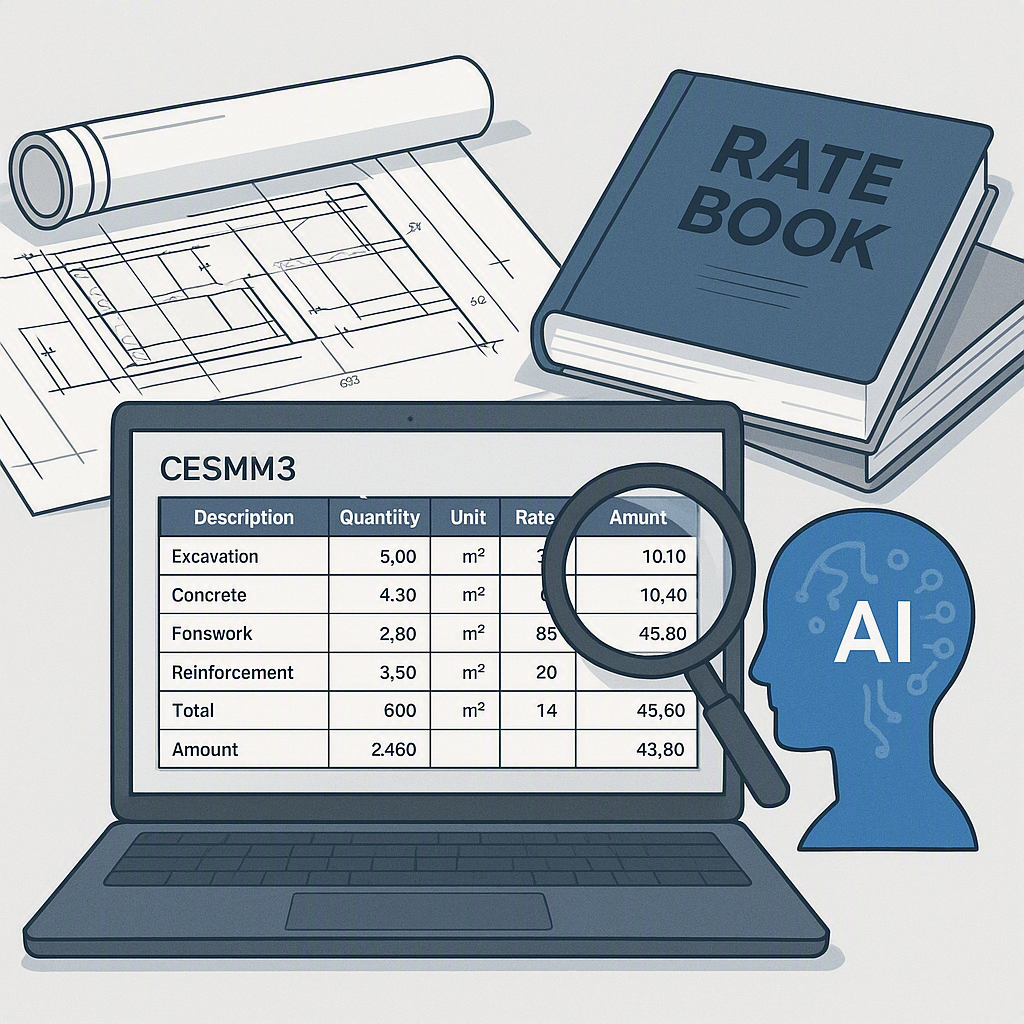
Why FIDIC CESMM3 Matters for Construction Estimation
If you've worked in construction estimation, you know how critical accuracy is—especially when bidding for large-scale projects. A small error can snowball into lost margins or even losing a bid altogether. The FIDIC CESMM3 framework (Civil Engineering Standard Method of Measurement) provides a structured way to approach cost estimation, breaking down work into clear, measurable units.
But here's the catch: CESMM3 is comprehensive, and manually applying it to complex BOQs (Bills of Quantities) can take significant time. Does that mean it’s impractical? Not at all. It just means you need smarter tools to make it work.
How CESMM3 Structures Estimation
At its core, CESMM3 organizes measurements into standardized categories, ensuring everyone’s speaking the same “language” when pricing works. For example:
- Work classification: Divides tasks into sections like excavation, concrete works, and structural steel.
- Units of measurement: Defines clear measurement rules (e.g., cubic meters for earthworks, tons for steel).
- Descriptions: Standardizes item descriptions to avoid ambiguity.
This level of standardization is especially critical in international projects. If you're working in regions like the GCC or India, where FIDIC contracts are common, CESMM3 compliance can save headaches when reconciling rates across regions. However, manually mapping your BOQ to CESMM3 categories can be tedious, especially when BOQs are extensive.
The Problem with Manual CESMM3 Mapping
Let’s face it: manual mapping to CESMM3 is slow and error-prone. Imagine flipping through rate books like CPWD DSR or RSMeans while trying to match numerous BOQ items to CESMM3 categories. Even experienced estimators can miss details, leading to misaligned costs and potential disputes.
Illustrative example — An estimator working on a large infrastructure project might spend significant time manually linking BOQ items to CESMM3 standards. This process can be both time-consuming and prone to human error.
How AI Tools Simplify CESMM3 Mapping
This is where AI-powered tools can shine. Instead of wasting days manually sorting BOQ items, AI can automate the process:
- BOQ Parsing: Upload your BOQ in Excel or PDF format. The software detects headers, hierarchies, and merged cells automatically.
- Rate Matching: AI matches BOQ lines to CESMM3 categories using a database of standard items. It can also factor in regional variations like CPWD DSR for India or AECOM rates for GCC.
- Audit Trail: Every matched item includes an audit trail, so you can trace how rates were applied.
Illustrative example — Using AI tools, a contractor could potentially reduce the time required to map a large BOQ to CESMM3 standards from days to hours, improving efficiency and accuracy.
Common Mistakes When Using CESMM3
While CESMM3 is powerful, it’s not foolproof if used incorrectly. Watch out for these pitfalls:
- Over-complication: Don’t over-describe items. Stick to the CESMM3 format.
- Unit mismatches: Ensure your BOQ units align with CESMM3 measurement rules (e.g., cubic meters vs. tons).
- Rate inconsistency: Use standardized rates to avoid disputes during reconciliation.
FAQ: CESMM3 and Construction Estimation
Q: Can CESMM3 be used for smaller projects?
A: Absolutely. While CESMM3 is often used for large infrastructure projects, its structured approach works for smaller jobs too.
Q: Is CESMM3 suitable for international projects?
A: Yes! CESMM3’s standardized format makes it ideal for cross-border projects where multiple stakeholders need clear, consistent measurements.
Q: How does AI improve CESMM3 compliance?
A: By automating BOQ parsing and rate matching, AI tools ensure faster, more accurate CESMM3 mapping, reducing errors and disputes.
The Bottom Line
CESMM3 is a gold standard for construction cost estimation, but manually applying it to complex BOQs wastes valuable time. Tools that leverage AI can automate the process, making CESMM3 compliance faster and easier. If your team struggles with manual mapping, it’s worth exploring AI-powered solutions.
Learn more at JobNext.ai - Construction ERP
Put this into a real cost estimate
Describe your project and get a complete, costed estimate in about a minute — free to start.