



How to Use RSMeans for BOQ Without Wasting Hours on Manual Calculations
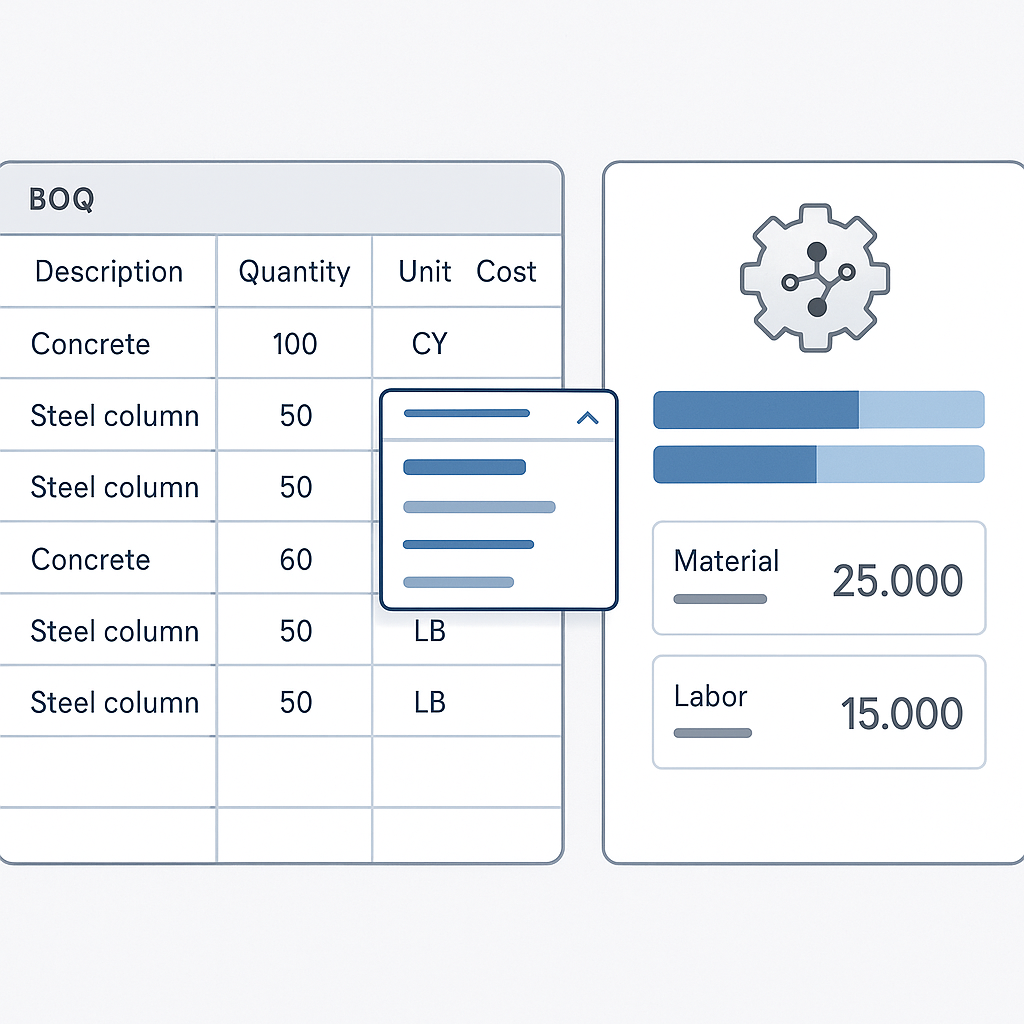
Why RSMeans is Both a Lifesaver and a Headache for BOQs
If you're in construction estimation, you've likely used RSMeans. It's a goldmine for unit rates across trades, geographies, and project types. But let’s be honest—it can also be a time sink.
The problem? RSMeans is massive. With over 85,000 line items, finding the right rate can feel like searching for a needle in a haystack. And once you find it, you still have to manually match it to your BOQ, adjust for inflation, and hope you didn’t miss a line.
We’ve all been there. You spend hours flipping through PDFs or scrolling through RSMeans Online, only to realize you’ve linked the wrong rate to your line item. The result? Delays, errors, and bids that are either uncompetitive or eat into your margins.
But it doesn’t have to be this hard. Let’s walk through how you can streamline this process, avoid costly mistakes, and save hours on every estimate.
Step 1: Ditch the PDFs—Use a Searchable Database
RSMeans in PDF form is like a library without a catalog. Sure, the information is there, but accessing it takes forever. If you’re still flipping through pages to find rates, you’re doing it the hard way.
Instead, use a platform like EstimateNext. It integrates RSMeans data into a searchable database, so you can type in a term like "200mm RCC slab" and get an exact match within seconds. No more guessing which section or page to look at. You can even filter results by region, project type, or material class.
Actionable Steps to Simplify Searches
- Use Specific Keywords: Search for precise terms like "fiber-reinforced concrete" or "HVAC duct installation" instead of generic phrases. This narrows down the results quickly.
- Filter by Region or Project Type: If your project is in Chicago, filter rates by the Chicago cost index. This eliminates irrelevant results.
- Save Frequently Used Rates: Bookmark or save rates you use often within the tool for even faster access in future projects.
Comparison Table: PDF vs. Searchable Database
| Feature | Searchable Database | |
|---|---|---|
| Search Speed | Slow, manual | Instant, automated |
| Error Risk | High (manual entry) | Low (automated matching) |
| Filtering Options | None | Region, type, material class |
| Usability for Teams | Poor | Excellent |
This way, you’re not just finding rates faster; you’re reducing the risk of errors that come from manually copying numbers.
Step 2: Automate Rate Adjustments for Inflation
Here’s a common mistake: using outdated rates. RSMeans updates its data annually to account for changes in labor, materials, and equipment costs. If you’re using rates from 2021 for a project in 2024, you’re already behind.
EstimateNext simplifies this by applying compound inflation factors automatically. For example, if you’re pricing a project in Boston, the tool adjusts the rates based on RSMeans’ latest city cost index. This ensures that your estimates are accurate and competitive.
How Inflation Adjustment Works
- Annual Updates: RSMeans releases updated cost indexes annually. Ensure your tool syncs with the latest data.
- Regional Adjustments: Costs vary by city—what works for Dallas won’t apply to San Francisco. Use software that factors in these regional differences.
- Compound Inflation: A simple formula calculates inflation over multiple years. For example, 3% inflation annually compounded over 3 years adds up to roughly 9.27%. Automating this avoids manual errors.
Actionable Steps
- Always verify that your estimating software uses the latest RSMeans annual update.
- If you're managing older BOQs, apply inflation adjustments before reusing them.
- Regularly check regional cost indexes for projects in different cities.
Step 3: Match BOQ Line Items with AI
Manually linking BOQ line items to RSMeans rates is a recipe for mistakes. It’s not just tedious—it’s error-prone.
Here’s how EstimateNext changes the game:
- Upload your BOQ in Excel or CSV format.
- The AI scans your line items and matches them to the most relevant rates from RSMeans or your own custom catalog.
- For unmatched items, the system suggests alternatives or flags them for manual review.
Benefits of AI-Powered Matching
| Traditional Method | AI-Powered Matching |
|---|---|
| Time to Match Line Items | Hours (manual process) |
| Error Risk | High |
| Handling Unmatched Items | Manual review required |
| Scalability for Large BOQs | Poor |
Real-world example: Say you’re pricing a hospital project with 150 line items. Traditionally, you’d spend hours finding rates for each item and linking them to the BOQ. With AI, this process takes minutes. The system matches up to 85% of your line items automatically, freeing you to focus on the remaining 15%.
Step 4: Perform What-If Scenarios Without Breaking a Sweat
What-if scenarios are a nightmare in Excel. Change one rate, and you could spend hours rebalancing your entire BOQ. EstimateNext simplifies this with real-time rate propagation. Adjust one rate, and the system updates all dependent calculations instantly.
Example of What-If Scenarios
Imagine your client wants to replace standard concrete with fiber-reinforced concrete. Here’s how you can see the cost impact:
| Material | Base Cost (USD) | Cost Impact (%) | Adjusted Cost (USD) |
|---|---|---|---|
| Standard Concrete | $100/unit | Base Cost | $100/unit |
| Fiber-Reinforced Concrete | $100/unit | +15% | $115/unit |
This feature isn’t just a time-saver; it’s a game-changer for value engineering discussions.
Step 5: Standardize Your Outputs
Clients hate messy deliverables. Whether you’re submitting a GMP bid or a cost plan, your BOQ should look professional and audit-ready.
EstimateNext offers one-click exports to formats like CSI MasterFormat, CPWD DSR, or AIA G703. This ensures your deliverables are not only accurate but also easy to understand.
Actionable Steps for Standardization
- Select Output Format: Pick the format preferred by your client (e.g., CSI MasterFormat).
- Audit Your BOQ: Ensure all rates and calculations align correctly before exporting.
- Add Notes or Assumptions: Include clear notes for any assumptions made during estimation.
FAQ
Q: Can I use RSMeans data for international projects?
A: RSMeans is primarily designed for U.S. markets. However, platforms like EstimateNext include multi-market catalogs, so you can switch to CPWD DSR, CESMM3, or other relevant standards for international projects.
Q: How does EstimateNext handle unmatched BOQ items?
A: The AI flags unmatched items for manual review and suggests alternative rates based on context. Over time, it learns your preferences, reducing unmatched items in future estimates.
Q: What if my RSMeans subscription is outdated?
A: The tool applies inflation adjustments to bring older rates up to current market levels. However, having the latest RSMeans subscription ensures maximum accuracy.
Q: Can I adjust for region-specific costs?
A: Yes, EstimateNext uses RSMeans city cost indexes to adjust rates for regional variations.
Q: How does this compare to using Excel?
A: Excel is fine for small projects but struggles with scalability. Tools like EstimateNext automate rate matching, inflation adjustments, and output formatting, saving hours of manual work.
Avoid the Time Sink
If you’re still manually flipping through RSMeans PDFs or struggling with Excel-based BOQ preparation, it’s time to rethink your process. Tools like EstimateNext streamline rate matching, automate tedious calculations, and help you deliver professional outputs faster.
Learn more at JobNext.ai - Construction ERP
Put this into a real cost estimate
Describe your project and get a complete, costed estimate in about a minute — free to start.