



Navigating ERP Challenges in Construction: The Importance of Traceability
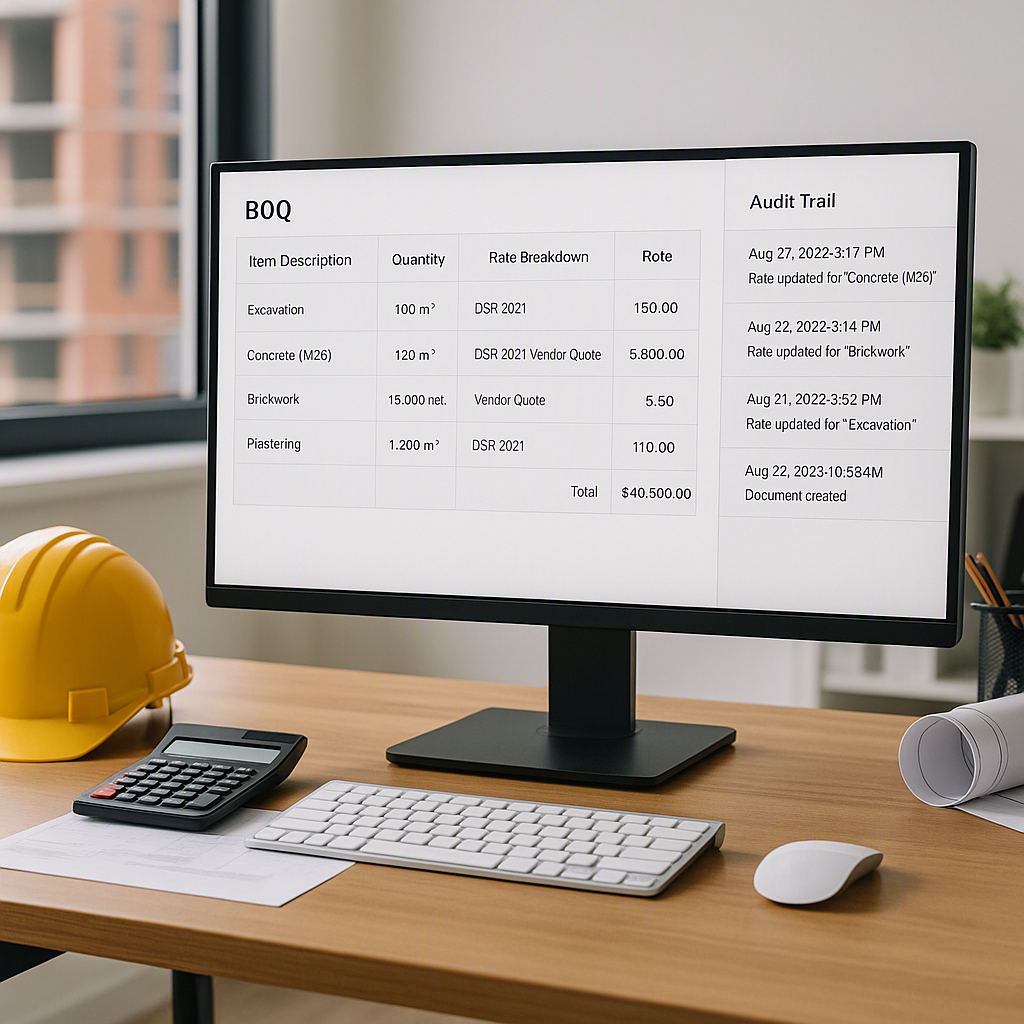
Implementing an ERP system in construction isn’t for the faint of heart. We’ve all heard the horror stories: budgets blown, deadlines missed, and teams stuck in Excel purgatory. For years, many believed the secret to ERP success was speed — deploy fast, fix issues later. But experience shows that traceability is the unsung hero of ERP implementation.
The Hard Lesson
On construction projects, a common issue arises when teams cannot trace the source of rates or decisions in their ERP systems. For example, a subcontractor might challenge a line item in the BOQ, claiming the rate is outdated. Without traceability, teams may struggle to identify whether the rate was based on a catalog, vendor quote, or manual override. This can lead to delays, strained client relationships, and inefficiencies.
Across projects, the same problem often emerges: a lack of defensibility in pricing decisions. It’s not that ERP systems lack features — they just don’t always make it easy to track changes or show the logic behind them. When clients or auditors demand explanations, “we don’t know” isn’t an acceptable answer.
Why It Happens
Traceability often takes a backseat during ERP evaluations. Teams are drawn to flashy dashboards and automation promises, while traceability features are overlooked. Additionally, the obsession with speed can backfire. Rapid estimates without defensible workflows can lead to disputes and wasted time later.
How to Prioritize Traceability
To avoid these pitfalls, traceability should be a non-negotiable requirement in ERP evaluations. Every rate needs to be tied to a clear source — whether it’s a catalog, vendor quote, or manual adjustment. Modern ERP tools often include features that track inputs, timestamps, versioning, and audit trails. These capabilities ensure defensibility and transparency in decision-making.
Illustrative example — A tool with semantic search across thousands of SOR items allows users to pull rates quickly while maintaining a clear audit trail. Every rate is timestamped, versioned, and traceable back to its source catalog, providing a paper trail for every decision.
Consequences of Skipping Traceability
Skipping traceability has real consequences:
- Delays: Chasing down rate discrepancies can eat up valuable time, putting project timelines at risk.
- Trust Issues: Clients and auditors lose confidence when numbers cannot be explained, damaging reputations.
- Hidden Costs: Without traceability, teams may overestimate contingencies to cover unknowns, leading to inefficiencies.
Challenges in Implementation
Even with modern tools, traceability isn’t foolproof. Training teams to use these features consistently remains a challenge, as old habits like relying on personal spreadsheets persist. Additionally, handling legacy data from historical projects that lack proper traceability can be complex.
Practical Takeaways
If you’re implementing an ERP, prioritize traceability from day one. Insist on features that allow you to track every rate and decision. Set up workflows that reinforce traceability, such as standardizing rate sources across teams and making audit trails part of the review process.
FAQ
1. What is traceability in ERP systems? Traceability ensures every rate, decision, and adjustment in the ERP system can be tracked back to its source, whether it’s a catalog, vendor quote, or manual override.
2. How does traceability improve client confidence? It allows contractors to defend their numbers with hard data, showing clients exactly how rates were derived and adjusted.
3. Can older ERP systems be retrofitted for traceability? It depends on the system. Some older ERPs can integrate audit trail modules, but it’s often easier to migrate to a modern solution with built-in traceability.
4. Is traceability only useful for large contractors? Not at all. Even smaller firms benefit by saving time on disputes and improving client trust.
If traceability isn’t part of your ERP implementation plan, you’re leaving yourself exposed. Don’t wait for the first dispute to realize its value.
Learn more at JobNext.ai - Construction ERP
Put this into a real cost estimate
Describe your project and get a complete, costed estimate in about a minute — free to start.