



Top 5 Challenges in Construction Estimation and How AI Can Address Them
Top 5 Challenges in Construction Estimation and How AI Can Address Them
Construction estimation is often a complex and time-consuming process. It’s slow, manual, and prone to errors. If you’ve ever spent hours on drawing takeoffs or struggled with navigating extensive rate catalogs, you know the challenges firsthand. Let’s explore the biggest hurdles and how AI tools are helping to streamline these processes.
1. Takeoff Speed: Why Manual Tracing is Inefficient
Manual takeoffs are one of the most time-intensive tasks in construction estimation. Estimators often spend hours tracing PDFs in tools like Bluebeam to extract quantities for projects. This process is not only slow but also prone to human error. Even a small miscalculation—such as forgetting to account for an area or misreading dimensions—can snowball into significant cost discrepancies.
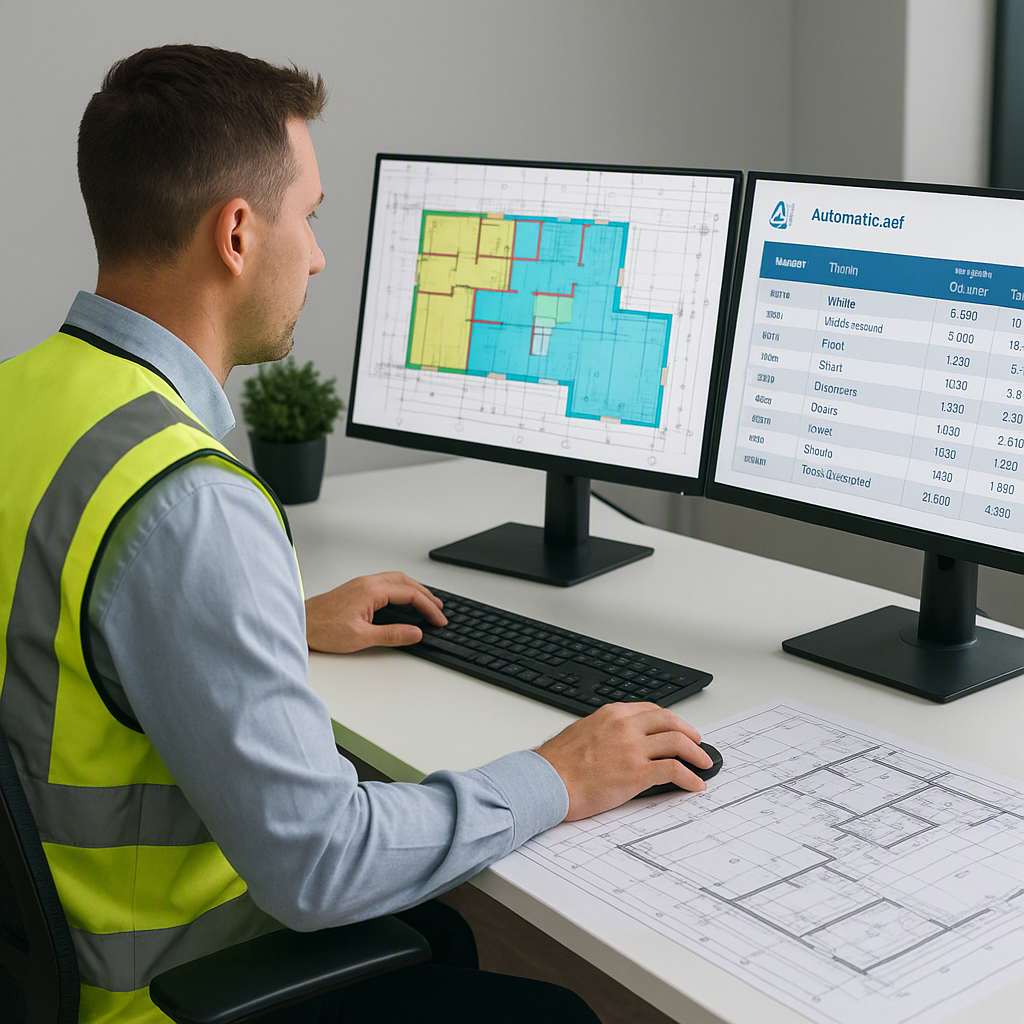
AI tools can significantly reduce the time required for takeoffs by automating much of this workflow. These systems use machine learning to analyze drawings and automatically extract quantities such as room areas, wall lengths, and material volumes. They can even identify different layers or sections of a blueprint, providing detailed breakdowns for specific construction components. However, it’s important to note that human oversight is still necessary to verify results and address low-confidence areas flagged by the AI.
Actionable Steps to Incorporate AI for Takeoffs:
- Digitize Your Blueprints: Ensure your project drawings are in digital formats (e.g., PDFs or CAD files) that AI tools can process.
- Choose AI Software with Confidence Indicators: Look for tools that highlight low-certainty outputs so you can double-check only the critical areas.
- Train Your Team: Even the best AI solutions require users who know how to interpret outputs and refine results.
Why This Matters: Faster takeoffs enable teams to submit more bids in less time, increasing the chances of winning projects. A McKinsey report notes that contractors using digital tools report a 15-20% improvement in bid success rates.
2. Rate Lookup: Simplifying Complex Catalogs
Pricing construction tenders often involves navigating extensive rate catalogs, such as the CPWD DSR, which can run into thousands of pages. Searching for specific items manually can be a tedious and time-consuming process, especially when multiple catalogs are involved. Estimators must cross-reference rates, adjust for local market conditions, and ensure accuracy—all while working under tight deadlines.
AI-powered semantic search tools address this issue by enabling users to search across multiple rate catalogs quickly and efficiently. These tools leverage natural language processing (NLP) to identify relevant items based on keywords and context, even if the exact phrasing does not match. For example, searching for “concrete slab” might also return related items like “reinforced concrete flooring.”
Additionally, AI systems learn from user inputs over time. If you frequently select certain items or adjust rates based on specific criteria, the tool can incorporate these patterns to improve its recommendations.
Actionable Steps to Optimize Rate Lookup:
- Centralize Rate Data: Consolidate all rate catalogs, including local supplier rates, into a single digital platform.
- Use Filters and Tags: Organize data with categories like material type, region, or project phase for quicker access.
- Leverage AI Tools with Contextual Search: Ensure the tool supports NLP for better search relevance.
Why This Matters: Streamlined rate lookup allows estimators to allocate more time to refining bid margins and conducting competitive analyses. According to Deloitte, companies that digitize pricing workflows see a 10-15% reduction in tender preparation time.
3. Sub Bid Leveling: Comparing Quotes Effectively
When comparing subcontractor quotes, estimators often face challenges due to scope variations, exclusions, and hidden costs. Normalizing these quotes manually requires meticulous attention to detail and can be riddled with inefficiencies—especially when dealing with multiple vendors.
AI-powered bid leveling tools simplify this process by analyzing subcontractor quotes, normalizing scope differences, and ranking vendors based on predefined criteria. For example, if one subcontractor excludes site preparation costs while another includes them, the AI can highlight these discrepancies for review. These tools also provide an audit trail, ensuring transparency and enabling better decision-making.
Actionable Steps to Improve Sub Bid Leveling:
- Define Standardized Evaluation Criteria: Establish clear benchmarks for comparing quotes (e.g., price, timeline, exclusions).
- Use AI to Highlight Discrepancies: Focus review efforts on areas where quotes deviate significantly.
- Incorporate Historical Data: Use previous project data to benchmark subcontractor performance and pricing.
Why This Matters: Accurate bid leveling minimizes the risk of costly mistakes and improves negotiation outcomes with subcontractors. A study by Dodge Data & Analytics found that 56% of contractors experience profit erosion due to unaccounted costs—an issue that bid leveling tools help mitigate.
4. What-If Scenarios: Enhancing Flexibility in Estimation
Clients often request changes to project parameters, such as adjusting markups or substituting materials. In traditional workflows, these changes require manual recalculations, which can be time-consuming and error-prone. This lack of agility can delay bid submission or lead to inaccuracies in the final estimate.
AI estimation platforms address this challenge by enabling real-time adjustments. Users can modify rates, cost factors, or other variables, and the system automatically updates the calculations. Advanced tools can even simulate multiple scenarios simultaneously, allowing estimators to present clients with a range of options.
Actionable Steps to Use AI for What-If Scenarios:
- Identify Common Variables: Focus on variables frequently adjusted, such as labor costs, material substitutions, or project timelines.
- Use Scenario Simulation Features: Choose tools that allow for side-by-side comparisons of different project assumptions.
- Collaborate with Stakeholders: Share real-time updates with clients to speed up decision-making.
Why This Matters: The ability to run what-if scenarios efficiently helps teams respond to client requests faster and with greater accuracy. This agility can be a key differentiator in competitive bidding situations.
5. Bid/No-Bid Decisions: Moving Beyond Gut Instinct
Bid/no-bid decisions are often made under time pressure, with limited analysis. This can lead to missed opportunities or the pursuit of unprofitable projects. For example, teams may focus on projects with high prestige but low margins, or underestimate the complexity of a bid’s requirements.
AI tools bring structure to this decision-making process by evaluating tenders against a set of predefined criteria. These criteria may include scope complexity, timelines, subcontractor capabilities, and margin potential. By providing data-driven insights, these tools help teams make more informed decisions.
Actionable Steps for Data-Driven Bid/No-Bid Decisions:
- Define Criteria for Evaluation: Establish quantitative benchmarks for profitability, risk, and strategic alignment.
- Leverage Historical Data: Use past project outcomes to refine your criteria and identify patterns.
- Integrate AI with CRM Tools: Ensure your AI platform interfaces with existing tools to provide a comprehensive view of opportunities.
Why This Matters: Structured analysis reduces risk and ensures that resources are allocated to the most promising opportunities. According to KPMG, companies using data-driven bidding strategies report a 12% increase in project win rates.
Comparison Table: Manual vs AI-Driven Estimation
| Task | Manual Process | AI-Driven Process |
|---|---|---|
| Takeoffs | Hours of manual tracing | Automated quantity extraction |
| Rate Lookup | Manual catalog navigation | Semantic search with NLP |
| Sub Bid Leveling | Manual scope normalization | Automated analysis and ranking |
| What-If Scenarios | Time-consuming recalculations | Real-time scenario adjustments |
| Bid/No-Bid Decisions | Gut instinct or limited analysis | Data-driven insights |
The Cost of Staying Manual
Every hour spent on manual tasks like takeoffs, rate lookups, or bid leveling is an hour that could be used to improve margins or pursue additional projects. While AI tools are not perfect, they continue to evolve and offer significant benefits when integrated into workflows.
If you’re looking to enhance efficiency and reduce errors in your estimation process, it may be time to explore AI-powered solutions.
Learn more at JobNext.ai - Construction ERP
Put this into a real cost estimate
Describe your project and get a complete, costed estimate in about a minute — free to start.