



Optimizing Construction Projects: Essential Strategies for Effective ERP Integration
ERP Implementation Best Practices for Construction
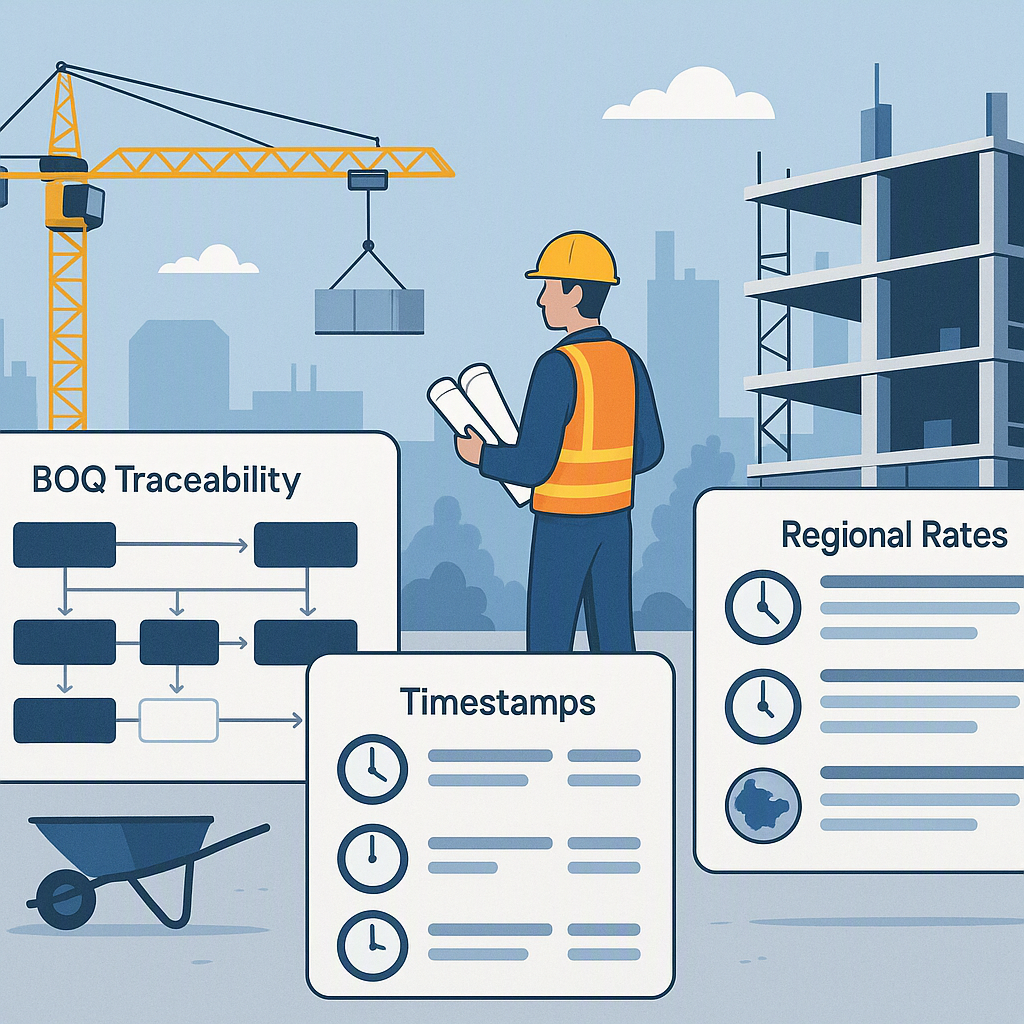
When implementing ERP systems in construction, the goal is often to streamline workflows and reduce inefficiencies. However, one critical aspect that is often overlooked is data traceability. Without it, disputes over pricing, resource allocation, and vendor accountability can arise, leading to inefficiencies and potential financial losses.
Why Data Traceability is Crucial
Data traceability ensures that every piece of information in your ERP system can be tracked back to its source. This is particularly important in construction, where disputes over labor rates, material costs, and other budget items are common. Without a clear audit trail, resolving these disputes can be time-consuming and costly.
For example, rate catalogs like India’s CPWD DSR are extensive and frequently updated. If your ERP system doesn’t track which version of the catalog was used for a Bill of Quantities (BOQ), it becomes challenging to justify your pricing. Systems that embed traceability into every rate calculation can help ensure that all data is defensible and transparent.
How Poor Traceability Can Impact Projects
Disputes over pricing and scope are among the top reasons construction projects face delays or fail. Without clear data traceability, these disputes can escalate, leading to prolonged negotiations and increased costs. Implementing robust traceability practices can help mitigate these risks.
Best Practices for Implementing ERP With Traceability
To ensure your ERP system prioritizes data traceability, consider the following best practices:
-
Choose ERP Systems With Built-In Traceability: Not all ERP systems are created equal. Look for tools that offer features like audit trails, version control, and transparent pricing calculations.
-
Define Traceability Rules During Implementation: Establish clear rules for data versioning, user overrides, and markup policies before rolling out the system. This ensures consistency and reduces the risk of disputes.
-
Train Teams on Audit Trail Usage: Educate your team on how to use the system’s traceability features effectively. This includes documenting changes and understanding how to access and interpret audit trails.
-
Integrate Market-Specific Rate Catalogs: Incorporate region-specific rate books, such as CPWD DSR or Gordian RSMeans, directly into your ERP system. This reduces manual errors and ensures compliance with local standards.
-
Test Dispute Scenarios Pre-Go-Live: Before launching the system, simulate potential dispute scenarios to ensure the traceability features function as intended. This allows you to address any gaps before they become real issues.
Common Mistakes to Avoid
- Ignoring Local Rate Compliance: Ensure your ERP system adheres to local compliance requirements, such as CPWD standards in India.
- Overloading Users With Features: Keep the system user-friendly by focusing on essential traceability features rather than unnecessary add-ons.
- Over-Reliance on AI: While AI can assist with data classification, pricing formulas should remain deterministic and reproducible to ensure defensibility.
Example Workflow: Traceable BOQ Creation
Illustrative example — here’s a simplified workflow for creating a traceable BOQ:
| Step | Action | Audit Trail Generated |
|---|---|---|
| BOQ Upload | Excel uploaded; system auto-detects merged cells and hierarchies | Dataset version + timestamp |
| SOR Matching | System matches BOQ lines with rate catalog | Matching algorithm used + user feedback |
| Rate Adjustment | Inflation uplift applied | Adjustment formula + market profile used |
| Final Output | Priced BOQ exported as Excel and PDF | Export timestamp + user details |
This workflow demonstrates how each step generates a traceable record, ensuring transparency and accountability.
Conclusion
Data traceability is not just a technical feature; it’s a critical component of effective ERP systems in construction. By prioritizing traceability during implementation, you can reduce disputes, improve efficiency, and enhance overall project outcomes. If your current ERP system lacks these capabilities, consider exploring tools that offer built-in traceability features to future-proof your operations.
Learn more at JobNext.ai - Construction ERP
Put this into a real BOQ
Describe your project and get a complete, costed Bill of Quantities in about a minute — free to start.